
Shoulder Workout plans that actually build stability tend to look a little “boring” at first glance, because the goal is control, not just load. If your shoulders feel shaky on presses, your push-ups collapse, or you get that pinchy feeling at the front of the joint, stability work is often the missing link.
This matters because the shoulder is built for mobility, not passive “tightness.” You’re asking a relatively small joint to handle big tasks: reaching overhead, pushing, pulling, carrying, catching yourself in sports, or just sitting at a desk all day without your upper traps taking over.
Below is a practical structure you can repeat weekly: how to tell what your shoulder needs, which exercises tend to carry over to pressing and pulling, how to progress without chasing pain, and when it’s smarter to get a clinician involved.
What “shoulder stability” really means (and why it breaks)
Stability is your ability to keep the shoulder centered and controlled while the arm moves. In plain terms, your shoulder blade (scapula) and rotator cuff create a steady base so the ball-and-socket joint doesn’t glide forward, hike up, or pinch.
Common reasons people struggle are pretty consistent in real gyms:
- Scapular control slips under fatigue, the shoulder shrugs and the neck does the job.
- Rotator cuff endurance is low, especially external rotators, so pressing gets wobbly.
- Thoracic (upper-back) stiffness forces the shoulder to “steal” motion overhead.
- Too much volume of pressing with not enough pulling and upward-rotation work.
- Technique drift: elbows flare, ribs pop up, or the bar path turns into a stress test.
According to the American Academy of Orthopaedic Surgeons (AAOS), shoulder pain often relates to tendon irritation, impingement-type symptoms, or instability patterns, and many cases improve with appropriate strengthening and activity modification. That’s not a promise for every body, but it explains why a stability-focused approach works so often.
Quick self-check: which “unstable shoulder” are you?
You don’t need fancy tests to get directional clues. Use these as quick signals, not a diagnosis.
1) The “shaky press” pattern
- DB or barbell presses feel wobbly even at moderate weight
- Lockout looks fine, but the mid-range trembles
- Push-ups feel unstable at the bottom
Usually points to: rotator cuff endurance and scapular control under load.
2) The “pinchy front shoulder” pattern
- Sharp or pinchy sensation near the front/top when reaching overhead
- Pressing feels worse after lots of sitting or chest-heavy training
Usually points to: limited upward rotation, tight pec minor or lats, and technique issues. Pain deserves more caution—scale down and consider professional input.
3) The “neck and trap takeover” pattern
- Shoulders creep toward ears during rows, carries, presses
- Neck gets sore before shoulders feel trained
Usually points to: low serratus anterior and lower-trap contribution, plus bracing and breathing habits.

The Shoulder Workout structure that builds stability (order matters)
This is the part many people miss: stability improves faster when you place the right work before heavy lifts, not after you’re cooked. Here’s a repeatable order for a Shoulder Workout day (or an “add-on” block before upper-body sessions).
| Block | Goal | Time |
|---|---|---|
| Prep | Restore motion, wake up cuff + scapula | 6–10 min |
| Activation/Skill | Teach control: serratus, lower trap, cuff endurance | 8–12 min |
| Main Strength | Press/pull with stable positions | 20–30 min |
| Accessory | Volume for balance, weak links, carryover | 10–15 min |
| Cool-down (optional) | Downshift, light mobility | 3–5 min |
Exercises that actually carry over (with sets, reps, cues)
Below is a stability-biased menu. Pick 1–2 from Prep, 2 from Activation, 2 from Main Strength, and 1–2 accessories. Keep the total manageable so you can repeat it consistently.
Prep (choose 1–2)
- Thoracic extension on foam roller: 6–8 slow reps, breathe out to keep ribs down.
- Lat/pec doorway stretch (gentle): 30–45 seconds each, stop short of numbness or sharp pain.
- Scapular circles on wall: 5 each direction, focus on smooth motion, not speed.
Activation/Skill (choose 2)
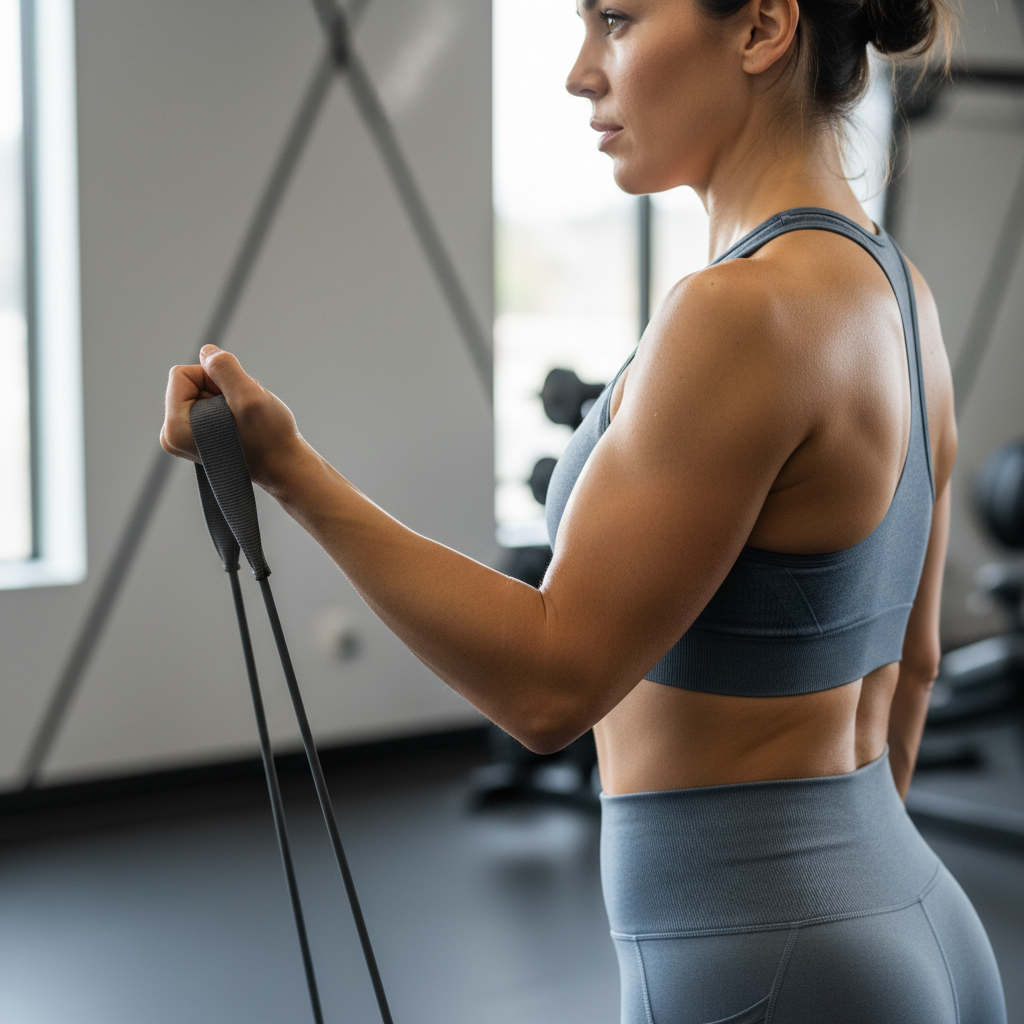
- Band external rotations (elbow by side): 2–3 sets of 12–20, slow return, no rib flare.
- Push-up plus (from knees or incline): 2–3 sets of 8–12, finish with shoulder blades spreading, neck relaxed.
- Wall slides with lift-off: 2–3 sets of 6–10, keep forearms on wall, reach “up and away.”
- Face pulls to external rotation: 2–3 sets of 10–15, end with knuckles back, elbows slightly below shoulders.
Main Strength (choose 2)
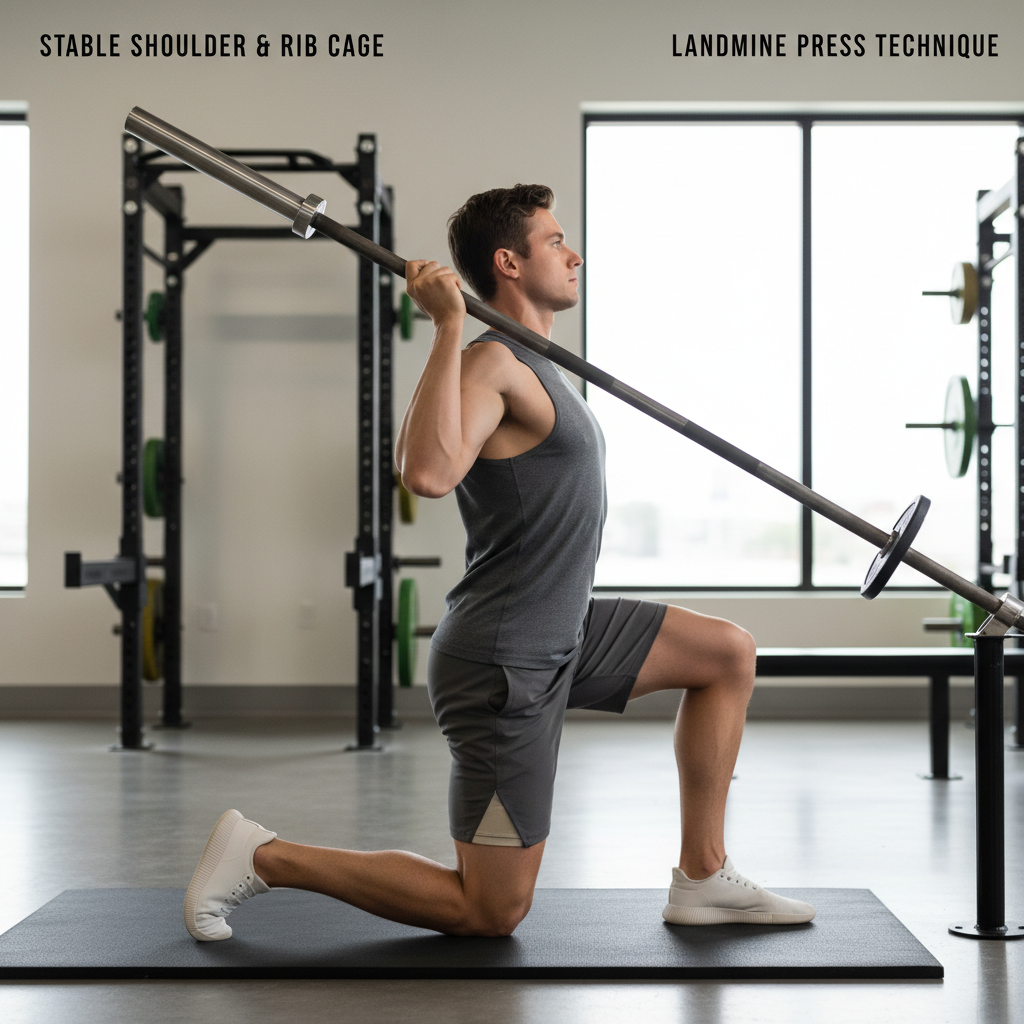
- Half-kneeling single-arm landmine press: 3–4 sets of 6–10 each side, ribs stacked over hips, reach at the top.
- Dumbbell incline press (neutral grip): 3–4 sets of 6–10, elbows 30–45 degrees from torso, control the bottom.
- Chest-supported row: 3–4 sets of 8–12, pause 1 second with shoulder blade pulled back and down.
- Neutral-grip pulldown or assisted pull-up: 3–4 sets of 6–10, don’t crank neck forward to “find” the bar.
Accessory (choose 1–2)
- Prone Y raise: 2–3 sets of 10–15, light weight, slow tempo.
- Suitcase carry: 3–5 carries of 20–40 yards each side, stay tall, no leaning.
- Rear delt cable fly: 2–3 sets of 12–20, stop before upper trap dominates.
How to progress without aggravating your shoulder
The fastest way to lose momentum is “testing” the joint every session. Stability improves when you progress like practice.
- Start with reps, then load: earn 12–15 clean reps before adding weight on activation work.
- Use tempo: a 2–3 second lowering phase builds control without chasing heavier dumbbells.
- Keep 1–3 reps in reserve on pressing for a few weeks, especially if symptoms show up.
- Balance push and pull volume: many people do better with slightly more pulling than pressing during a “stability block.”
If discomfort appears, it helps to distinguish between “working” and “warning.” A mild muscular burn around the back of the shoulder is common. Sharp pain, catching, or pain that lingers and ramps up over 24–48 hours is a sign to back off and reassess.
Common mistakes that quietly kill stability gains
- Doing cuff work only at the end when your form already collapsed.
- Chasing “burn” in the upper traps and calling it shoulder training.
- Going too wide overhead when your mobility does not support it yet.
- Skipping the reach at the top of pressing and push-up variations, serratus tends to stay asleep.
- Assuming tightness is the issue and stretching aggressively while ignoring strength and control.
According to the National Strength and Conditioning Association (NSCA), exercise selection and technique matter for joint stress management, and progressive loading should match movement competency. In day-to-day terms, clean reps beat “tough” reps for this goal.
When it’s time to get professional help
A Shoulder Workout can help many gym-related stability issues, but some signs deserve a higher bar for caution. Consider consulting a physical therapist, sports medicine clinician, or qualified professional if you notice any of the following:
- Pain that is sharp, worsening, or interrupts sleep
- Visible swelling, bruising, or a “pop” during injury
- Repeated feelings of slipping, dislocation, or true instability
- Numbness, tingling, or weakness down the arm
- No improvement after 3–6 weeks of scaled training
If you’re unsure, a conservative approach is usually safer: reduce aggravating ranges, keep pulling work, and use pain-free pressing angles until you get clarity.
Practical “do this next” plan (2–3 days/week)
If you want something you can run immediately, use this template for 4 weeks. Keep sessions short enough that you’ll actually repeat them.
- Day A: Band external rotation 3x15, Push-up plus 3x10, Landmine press 4x8, Chest-supported row 4x10, Suitcase carry 4x30 yards
- Day B: Wall slides 3x8, Face pull to ER 3x12, Neutral-grip pulldown 4x8, DB incline press (neutral) 4x8, Prone Y raise 3x12
Key points to keep in mind: keep the ribcage stacked, let the shoulder blade move instead of pinning it down, and prioritize smooth reps over load jumps.
Conclusion: stability is trained, not “found”
A Shoulder Workout aimed at stability usually feels like you’re polishing fundamentals, because that’s exactly what it is. When you put scapular control and rotator cuff endurance earlier in the session, presses and pulls often start feeling quieter, stronger, and less irritating.
Pick the template, run it for four weeks, and track two things: how steady your reps look, and how your shoulder feels the next day. If either trend moves the wrong direction, scale range or load and consider getting a pro set of eyes.
If you need a more personalized plan, especially if pain keeps returning, working with a qualified coach or clinician can help match exercise selection to your anatomy, sport, and training history without guessing.