
Weight Lifting can feel intimidating at the start because you’re trying to learn new movements, avoid injury, and still get results without living in the gym.
If you’ve ever wandered around the weight room thinking “I’m not sure what to do next,” you’re not alone, beginners usually struggle with the same few bottlenecks: picking the right exercises, using a sensible starting weight, and knowing how to progress without burning out.

This guide keeps it practical: what to focus on in your first month, how to build a simple plan, and the small safety habits that make lifting feel more confident fast.
What beginners should know before the first session
Before you worry about “the perfect program,” get the fundamentals straight, they solve most early frustration. Weight training is basically a skill plus a stimulus: you practice good reps, then you add challenge slowly enough that your body adapts.
According to the Centers for Disease Control and Prevention (CDC)... adults benefit from muscle-strengthening activities on 2 or more days per week. That’s a good baseline for beginners because it gives you enough frequency to learn movements while still recovering.
- Form beats load, especially early. Your goal is repeatable technique, not “winning” one workout.
- Consistency beats variety. Doing a few key lifts for weeks helps you learn faster than switching everything every session.
- Recovery is part of the plan. Soreness is common, joint pain is a red flag.
Common reasons Weight Lifting feels “not for me”
A lot of people quit because they assume the problem is motivation, but it’s often the setup.
- Too much too soon: starting with high volume, heavy weights, or daily lifting, then feeling wrecked for a week.
- No progression rule: repeating the same weights forever, or adding weight every session until form falls apart.
- Only “mirror muscles”: lots of curls and random machines, not enough legs, back, and core, results stall.
- Unclear goals: “tone up” is vague, “lift 3 days/week for 8 weeks and add 20 lb to my squat pattern” is actionable.
One more thing people rarely say out loud: the gym can feel socially loud. Having a written plan reduces that awkward wandering and makes the whole experience calmer.
Quick self-check: what kind of beginner are you?
Pick the closest match, then follow the matching approach in the next sections.
- I’m brand new: you haven’t trained consistently in the last 6 months, start with simple full-body sessions.
- I’m “cardio fit” but weak: you tolerate effort but don’t know loads, focus on technique and progressive overload.
- I’ve lifted on and off: you know some lifts but lack structure, use a repeatable template and track it.
- I have aches or old injuries: you may need regressions, limited ranges, and professional guidance.
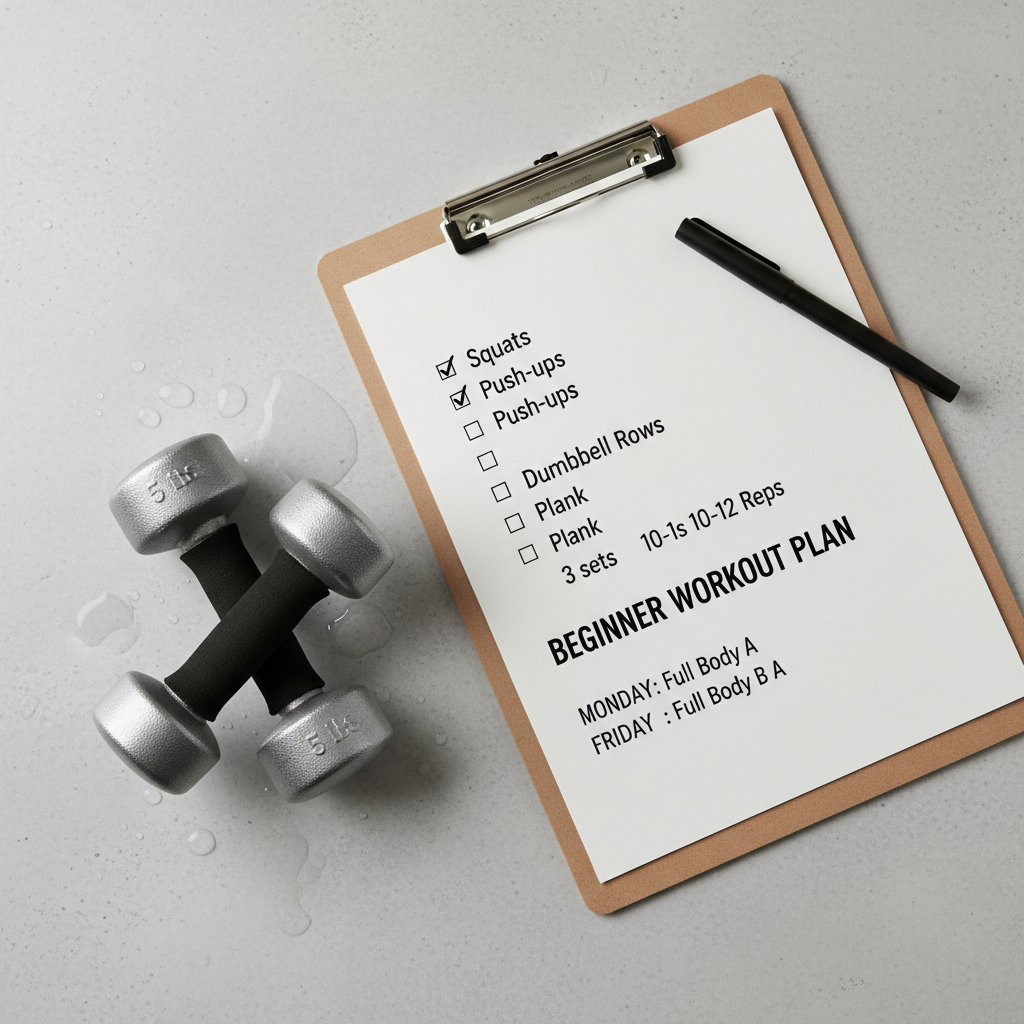
If you’re unsure where you fall, default to “brand new.” It’s easier to add work later than to undo a month of sloppy reps.
Core movements that give beginners the most return
You don’t need dozens of exercises. You need a handful that train big muscle groups and build coordination.
- Squat pattern: goblet squat, bodyweight box squat, or machine hack squat if needed
- Hip hinge: Romanian deadlift with dumbbells, hip thrust, or kettlebell deadlift
- Push: push-up, dumbbell bench press, or machine chest press
- Pull: one-arm dumbbell row, lat pulldown, or cable row
- Carry or core brace: farmer carry, dead bug, or plank variations
According to the American College of Sports Medicine (ACSM)... resistance training is typically performed with a combination of multi-joint and single-joint exercises, and beginners often do well starting with moderate loads and controlled technique. Translation: big basics first, then add small accessory work if you have time.
A simple 3-day beginner plan (with a progression rule)
Three full-body sessions per week works well for many beginners because you practice often without turning lifting into a second job. Leave at least one rest day between sessions when possible.
Workout A
- Goblet squat: 3 sets x 8–10 reps
- Dumbbell bench press: 3 x 8–10
- Lat pulldown: 3 x 10–12
- Romanian deadlift (dumbbells): 2–3 x 8–10
- Plank: 2 x 20–45 seconds
Workout B
- Split squat or leg press: 3 x 8–10 each side
- One-arm dumbbell row: 3 x 10–12
- Overhead press (dumbbells): 3 x 8–10
- Hip thrust or glute bridge: 3 x 10–12
- Farmer carry: 4 short walks of 20–40 seconds
Schedule idea: Mon A, Wed B, Fri A, then next week start with B.
Progression rule (simple and realistic): pick a rep range, when you can hit the top end for all sets with solid form and 1–2 reps “in the tank,” add 2.5–5 lb per dumbbell next time (or the smallest machine jump). If your gym jumps are large, add reps first.
How to choose your starting weight (without guessing wildly)
The best starting weight is the one that lets you own the movement. Here’s a quick, non-dramatic way to find it.
- Do a warm-up set with a very easy weight for 8 reps.
- Add a little weight and do 5 reps, focus on control and range of motion.
- Your working sets should feel like you could do 1–3 more reps with decent form.
If you’re shaking, holding your breath, or shortening the range to “get it done,” the load is probably too heavy for practice reps.
Safety, form, and gym habits that prevent most problems
Beginners usually don’t get hurt because lifting is “dangerous,” they get hurt because they rush, copy advanced routines, or ignore small warning signs.
- Warm up with purpose: 5–8 minutes easy cardio plus 1–2 lighter sets of your first lift often suffices.
- Use controlled tempo: if you can’t lower the weight smoothly, it’s too heavy today.
- Brace and breathe: exhale through the effort, avoid holding your breath for long unless coached.
- Stop for sharp pain: muscle burn is normal, sharp joint pain or numbness is not.
- Keep a log: notes on sets, reps, load, and “how it felt” makes progress obvious.
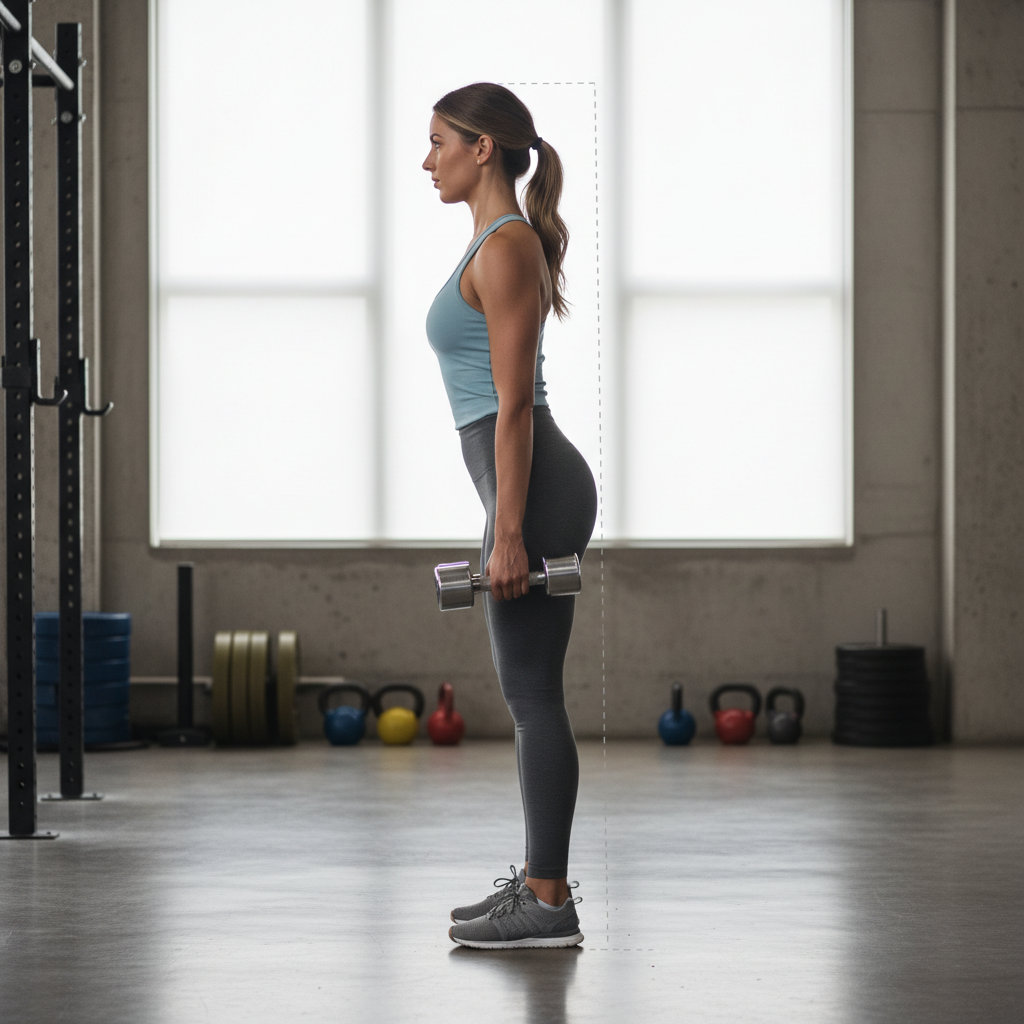
If you train at a busy gym, picking mostly dumbbells and cables early can also reduce stress, you’re less dependent on one specific rack or bench.
Beginner checklist and a realistic first-month timeline
People love asking “when will I see results,” but the better question is “what should improve first.” In many cases, the first wins are skill and consistency, then strength, then visible physique changes.
Key points to track
- Week 1–2: learn setup, find starting weights, leave sessions feeling capable, not crushed
- Week 3: small load increases, smoother reps, less soreness between sessions
- Week 4: noticeable strength changes in main lifts, more confidence in the weight room
Quick table: sets, reps, rest (beginner-friendly)
| Goal | Typical reps | Sets | Rest | Notes |
|---|---|---|---|---|
| Learn technique | 8–12 | 2–3 | 60–120 sec | Stop with 1–3 reps left |
| Build strength base | 5–8 | 3–4 | 90–180 sec | Only after form feels consistent |
| General muscle gain | 8–15 | 3–4 | 60–120 sec | Progress with reps, then load |
When to get coaching or medical guidance
If you’re generally healthy, many people can start with conservative loads and learn safely. Still, some situations deserve extra support.
- Recent surgery, ongoing physical therapy, or unexplained pain
- Recurring back, shoulder, or knee issues that flare with basic movements
- Dizziness, chest pain, or unusual shortness of breath during training
According to the Mayo Clinic... strength training has broad benefits, but they also emphasize proper technique and medical clearance for people with certain health conditions. If anything feels off, it’s reasonable to consult a clinician or a qualified trainer.
Practical wrap-up: what to do next
You don’t need an extreme plan to get started with Weight Lifting, you need a repeatable routine, clean reps, and a progression rule you can follow even on busy weeks.
Action steps: pick the 3-day template, write down your starting weights today, then commit to 8–12 sessions before you judge whether it “works.” Most beginners feel dramatically more confident by then.
FAQ
Is Weight Lifting safe for beginners?
In many cases, yes, when you start with manageable loads and learn technique. Risk goes up when people rush, ignore pain, or copy advanced programs, so keeping things simple is usually the safer move.
Should I lift weights or do cardio first if I want fat loss?
Either can work, and it often depends on what you can sustain. Many people like lifting 2–4 days per week and adding light cardio on off days, because strength work helps maintain muscle while you diet.
How long should a beginner workout take?
About 45–70 minutes is common, including warm-up. If you’re routinely hitting 90+ minutes, the plan is probably too complicated or rest times are drifting.
Do I need protein supplements to start lifting?
No, supplements are optional. Hitting a reasonable daily protein intake through food often covers the basics, and if you have dietary restrictions, a registered dietitian can help tailor targets.
What if I feel sore for days after lifting?
Some soreness is normal early on, but being unable to train again for a week usually means volume or load is too high. Reduce sets, keep the movements, and build up gradually.
Can I do Weight Lifting at home with dumbbells only?
Yes, many beginners make solid progress with adjustable dumbbells and a bench. You may need to get creative with leg training over time, but you can go far with split squats, hinges, presses, and rows.
How do I know when to add weight?
If you can complete all sets at the top of your rep range with steady form and still feel like you had 1–2 reps left, that’s usually a good time to add a small amount next session.
What’s the biggest beginner mistake in the weight room?
Chasing exhaustion instead of progress. You want workouts that you can repeat and improve, not sessions that leave you wiped out and inconsistent.
If you’re trying to start Weight Lifting but want a more “plug-and-play” approach, consider having a trainer review your form for the core movements or build a short beginner block around your equipment and schedule, it often saves weeks of second-guessing.