
Resistance bands training can feel confusing at first, not because bands are “too basic,” but because the wrong band type or resistance range makes every rep either too easy or weirdly unstable.
If you want strength gains at home, while traveling, or as a joint-friendlier alternative to heavy free weights, bands can absolutely pull their weight, but only when you match the band to your exercises and your current strength.
This guide breaks down what to look for, which band styles work best for strength training, a quick self-check to pick the right resistance, plus a simple plan you can start this week.
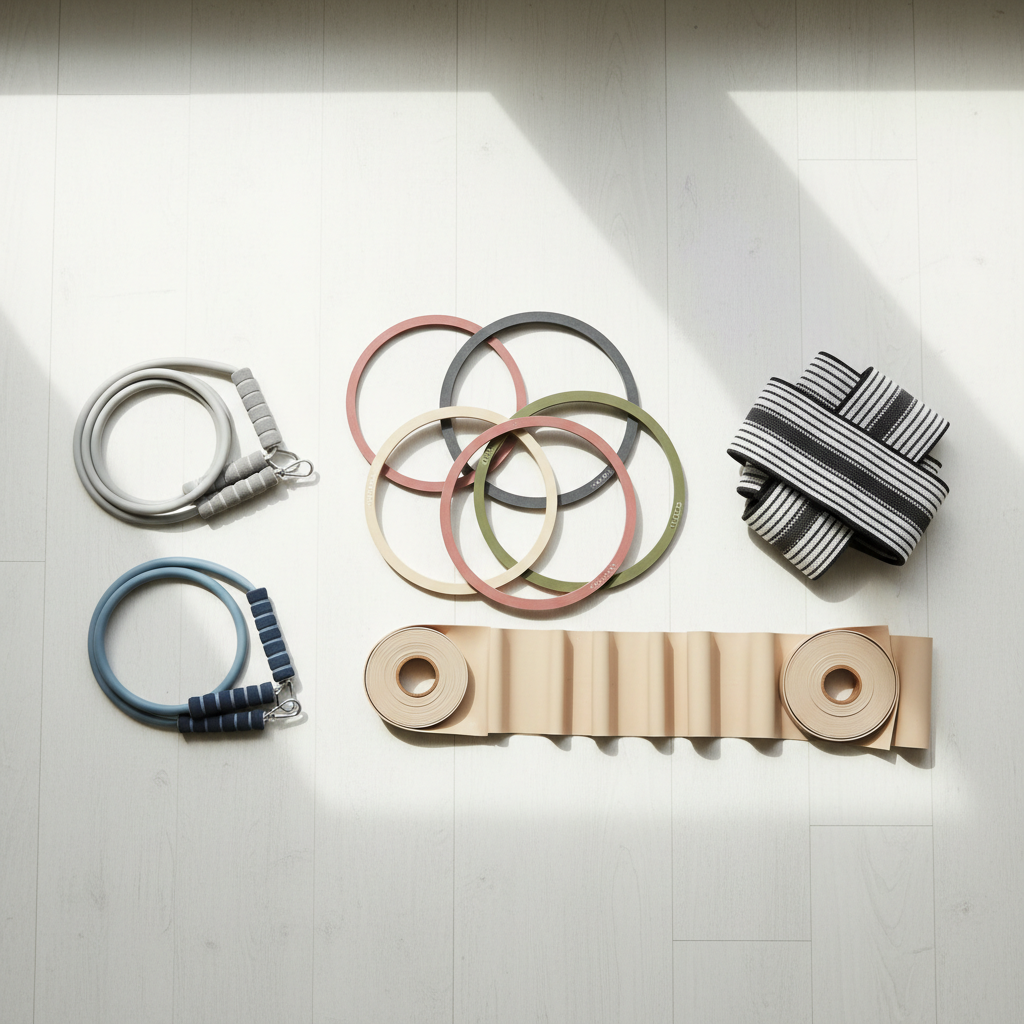
What actually makes a resistance band “good” for strength training
Most people shop by “color = difficulty,” then wonder why pull-aparts feel fine but rows feel pointless, or why squats get snappy at the bottom. For strength work, the band needs to behave predictably under load and fit your setup.
- Resistance range you can progress with: you need multiple levels, or a system you can stack, otherwise you stall fast.
- Consistent tension and quality latex: cheaper bands can vary in thickness along the length, which changes the feel rep to rep.
- Length that matches the movement: a band that’s too short turns deadlifts into a circus, too long makes presses sloppy.
- Comfort where it contacts you: for squats, hip hinges, and presses, rolling or biting into skin becomes the limiter, not your muscles.
- Anchoring options: door anchors, racks, or heavy furniture change what exercises are realistic.
According to the American Council on Exercise (ACE), elastic resistance is effective when you control form and select appropriate resistance, which is a polite way of saying “ego picks hurt shoulders.” Choose bands that let you move with control through the whole range.
Band types, pros/cons, and who they’re best for
“Best resistance bands” isn’t one product, it’s the right type for your main lifts and where you train. Here’s the practical breakdown.
| Band type | Best for | Watch-outs |
|---|---|---|
| Loop bands (41-inch powerlifting style) | Squats, deadlifts, bench assistance, pull-up assistance, heavy rows | Can snap if nicked; need space and solid anchoring |
| Tube bands with handles | Presses, rows, curls, travel workouts, rehab-style controlled reps | Handles/clip points can be failure points; inspect often |
| Fabric hip bands | Glute activation, lateral walks, warm-ups, high-rep accessory work | Not great for heavy compound strength; limited resistance |
| Therapy/flat bands | Physical-therapy style movements, light shoulder work, mobility | Hard to load heavy enough for strength training |
| Figure-8 bands | Quick pump sessions, curls/pressdowns, beginners learning tension | Short range, limited exercise variety |
If your goal is “get stronger at home,” loop bands usually give the most usable load. If your goal is “I’ll actually do this on work trips,” tubes with handles win for convenience.
How to choose the right resistance (a fast self-check)
The right pick makes resistance bands training feel like real lifting: hard, controlled, repeatable. Use this quick checklist before you buy a 10-piece set you never touch.
1) Pick your main movements
- Lower body strength: squats, Romanian deadlifts, split squats, hip thrusts
- Upper body push: overhead press, chest press, push-up variations
- Upper body pull: rows, lat pulldown pattern, face pulls
2) Use the 8–15 rep “honest set” test
- Choose a band setup where you can hit 8–15 reps with good form.
- If you can do 20+ easily, you need more resistance or a better setup.
- If you can’t reach 6 without twisting, shrugging, or rushing, it’s too heavy or poorly anchored.
3) Check your anchor reality
- No anchor available: prioritize loop bands for under-foot moves and tube bands you can stabilize safely.
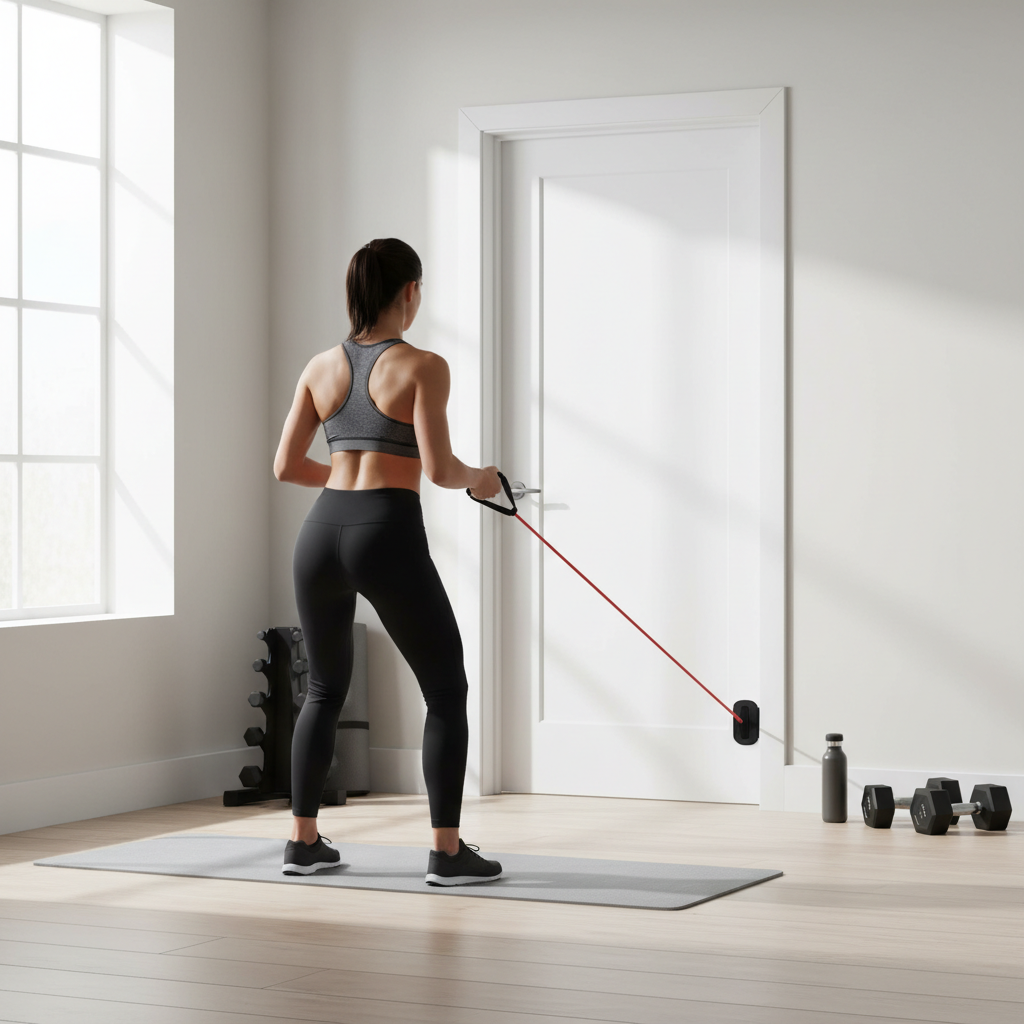
- Door anchor: tubes or flat bands become much more versatile, but you must trust the door and placement.
- Rack or heavy post: loop bands shine, especially for rows and pulldown patterns.
Recommended resistance bands by training goal (what to buy, not brand hype)
I’m not going to pretend one brand fits everyone. What matters is the style and a resistance spread you’ll actually progress with. Here are buying “recipes” that work in most cases.
For beginner-to-intermediate full-body strength at home
- Loop band set (light to heavy): at least 4 levels, including one that feels “too heavy” today for lower body.
- Door anchor: unlocks rows, pulldowns, presses without awkward angles.
- Optional: fabric hip band: makes warm-ups and glute work more comfortable.
For travel and small-space workouts
- Tube bands with handles: ideally with a way to stack resistance.
- One door anchor + one short strap: gives you multiple heights (low/mid/high) in a hotel room.
For strength athletes using bands as “accommodating resistance”
- Thick loop bands: built for heavy loading and repeated stretching.
- Protective sleeves or smart setup habits: avoid sharp edges on racks and barbells.
According to the National Strength and Conditioning Association (NSCA), progressive overload drives strength gains, meaning you need a clear path to make work harder over time. With bands, that typically means thicker bands, more stretch, slower tempo, more volume, or more stable angles.
A simple 3-day resistance bands strength plan (realistic, repeatable)
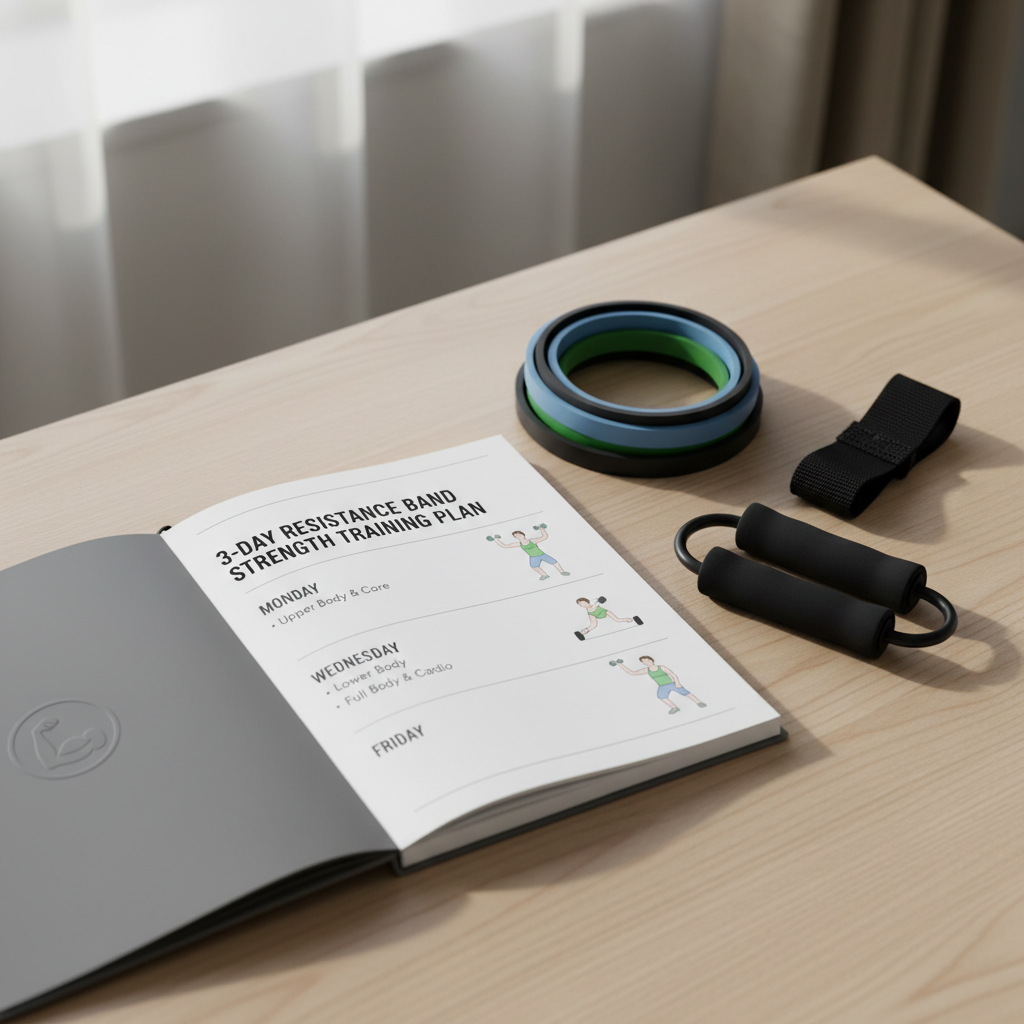
This is where resistance bands training stops being random and starts feeling like a program. Aim for 3 sessions per week, 35–55 minutes. If you have pain, or you’re returning from injury, it’s smart to consult a qualified professional.
Day A (Squat + Push + Upper back)
- Band squat: 4 sets x 8–12
- Standing band chest press (anchor mid height): 4 x 8–12
- Band row (anchor low): 4 x 10–15
- Face pulls: 3 x 12–20
Day B (Hinge + Overhead + Lats)
- Romanian deadlift (stand on band): 4 x 8–12
- Overhead press: 4 x 8–12
- Lat pulldown pattern (anchor high): 4 x 10–15
- Pallof press: 3 x 10–15 per side
Day C (Unilateral legs + Arms + Extra back)
- Split squat: 4 x 8–12 per side
- Single-arm row: 4 x 10–15 per side
- Biceps curl: 3 x 10–20
- Triceps pressdown: 3 x 10–20
Key points that make it work: keep 1–3 reps “in the tank” most sets, add resistance only when reps look clean, and log what band you used so you’re not guessing next week.
Common mistakes that stall progress (or make bands feel “bad”)
Most frustration comes from a few fixable issues, not from bands being useless.
- Letting the band decide your path: if the band pulls you into a shrug or twist, reduce resistance, change stance, or re-anchor.
- Starting with zero tension: many moves need a little pre-stretch so the first third of the rep isn’t dead.
- Going too fast: bands punish sloppy speed. A 2–3 second lowering phase often makes the same band feel “heavier” without unsafe tricks.
- Ignoring wear: tiny nicks matter. Retire bands that look cracked, sticky, or thinned.
- Buying only mini bands: great for glutes, limited for full-body strength.
Also, if you train near max effort, eye protection isn’t typical, but keeping your face out of the line of pull is just common sense. If you’re unsure about an anchor point, pick a different exercise.
When you should get coaching or a more structured setup
Bands are simple, but not always easy. You may want help if any of these show up consistently.
- Sharp pain (not normal training discomfort), numbness, or symptoms that worsen session to session
- Shoulders feel “jammed” during pressing, even after reducing resistance and adjusting angles
- You can’t create stable anchoring in your space, so form stays compromised
- Your goal is serious strength (very low reps, high intensity) and you’re trying to replicate barbell loading
A qualified personal trainer or physical therapist can help with band positioning, exercise selection, and progression. If you have a medical condition or recent surgery, it’s smart to check in with a clinician before pushing intensity.
Conclusion: the “best” bands are the ones you can progress with
Resistance bands training works best when you treat bands like real equipment, pick the right type for your main lifts, then progress methodically rather than improvising resistance every session.
If you do one thing today, do this: choose a band setup that gives you clean 8–15 rep sets on squats, presses, and rows, then track it for three weeks. That’s usually enough time to feel whether you’re getting stronger or just getting tired.
FAQ
What resistance bands are best for strength training at home?
For most people, 41-inch loop bands plus a door anchor cover the widest range of strength movements. Tubes with handles can work well too, especially if you value convenience and smoother grip.
Can resistance bands build muscle like weights?
They can build muscle for many trainees, particularly when you use challenging resistance, train close to fatigue with good form, and progress over time. The main limitation is loading heavy enough for some advanced lifters.
How do I know what band tension to buy?
Aim for a spread of resistances so you can hit 8–15 controlled reps on big movements. If the set jumps from “easy” to “impossible,” you’ll end up avoiding the exercises that matter most.
Are tube bands or loop bands better?
Loop bands usually win for heavier lower-body work and assisting pull-ups. Tube bands often feel better for presses, curls, and travel workouts, but you should inspect clips, handles, and connection points regularly.
Is resistance band training safe for shoulders?
Often yes, because you can adjust angles and load gradually, but shoulder comfort varies by person and setup. If pressing causes pinching or sharp pain, reduce resistance, change the anchor height, or consult a professional.
Do I need a door anchor for resistance bands?
Not strictly, but it expands your options a lot, especially for rows, pulldown patterns, and chest presses. Use a sturdy door, anchor on the hinge side when possible, and test gently before hard sets.
How long do resistance bands last?
It depends on material quality, storage, and use. If you notice cracks, thinning, sticky spots, or a “dry” feel, retire the band, those signs often show up before a failure.
If you’re trying to choose a setup that feels like real strength work without turning your living room into a gym, it may help to list your top 5 exercises and buy bands that match those movements instead of buying the biggest bundle online.