
Pilates Training can be a practical way to build a steadier core and a more upright posture without relying on heavy loads or high-impact workouts.
If you sit a lot, deal with a “mystery” low-back tightness, or notice your shoulders drifting forward in photos, you’re not alone. Many people try to fix posture by forcing their chest up or doing endless crunches, then wonder why nothing really changes.
This article breaks down what core and posture mean in Pilates terms, why your body may default to slouching, and how to practice with cues that feel realistic, not performative. You’ll also get a quick self-check, a short routine, and a week plan you can repeat.
What “core” and “posture” mean in Pilates (and what they don’t)
In Pilates, “core” usually points to the trunk as a system, not just the front abs. Think diaphragm (breathing), deep abdominals, pelvic floor, and back muscles coordinating so your spine feels supported during movement.
Posture also isn’t a frozen “stand up straight” pose. It’s your ability to stack ribs over pelvis, move your shoulder blades well, and keep your head from jutting forward while you breathe and move.
- Core strength often shows up as control: less wobbling, fewer compensations, smoother transitions.
- Better posture often shows up as endurance: you can sit or stand longer without feeling “held up” by neck tension.
- What it’s not: gripping your abs nonstop, tucking your pelvis hard, or pinning shoulders back all day.
According to the American Council on Exercise (ACE), building stability relies on training core muscles to work together, which is why controlled, well-cued exercise tends to matter more than chasing fatigue.
Why your posture drifts and your core feels “off”
Most posture problems aren’t a moral failing, they’re a pattern. Your body chooses the cheapest option for the task you do most.
Common real-world drivers
- Lots of sitting: hips stay flexed, upper back stiffens, neck does extra work.
- Breathing up in the chest: ribs flare, low back arches, deep core loses leverage.
- “Front-only” ab training: plenty of crunches, not much anti-rotation, hip stability, or spinal mobility.
- Overstretching instead of strengthening: you feel tight, stretch more, but the “tightness” may be guarding for weak control.
- Stress and fatigue: posture collapses when your nervous system looks for efficiency.
If you relate to any of these, Pilates-based work can help because it blends mobility, strength, and coordination in the same session.
A quick self-check: which pattern sounds like you?
This isn’t a diagnosis, just a way to choose smarter starting points. If anything causes sharp pain, dizziness, numbness, or symptoms that travel down an arm or leg, it’s safer to pause and consult a qualified clinician.
- Rib flare / low-back dominance: you feel your back during core work, ribs pop up when you inhale.
- Forward head / rounded shoulders: neck gets tight quickly, you “carry” your arms with the upper traps.
- Hip flexor takeover: legs feel heavy in ab work, front-of-hip pinch during lifts.
- Wobbly pelvis: single-leg moves feel unstable, you shift weight to one side standing.
Key takeaway: your routine should match your pattern. The right exercises done with the wrong cues can keep feeding the same compensations.
Pilates Training fundamentals that change the game (cues that actually work)
People often “do Pilates” but skip the skill part. These fundamentals make the work land where it should.
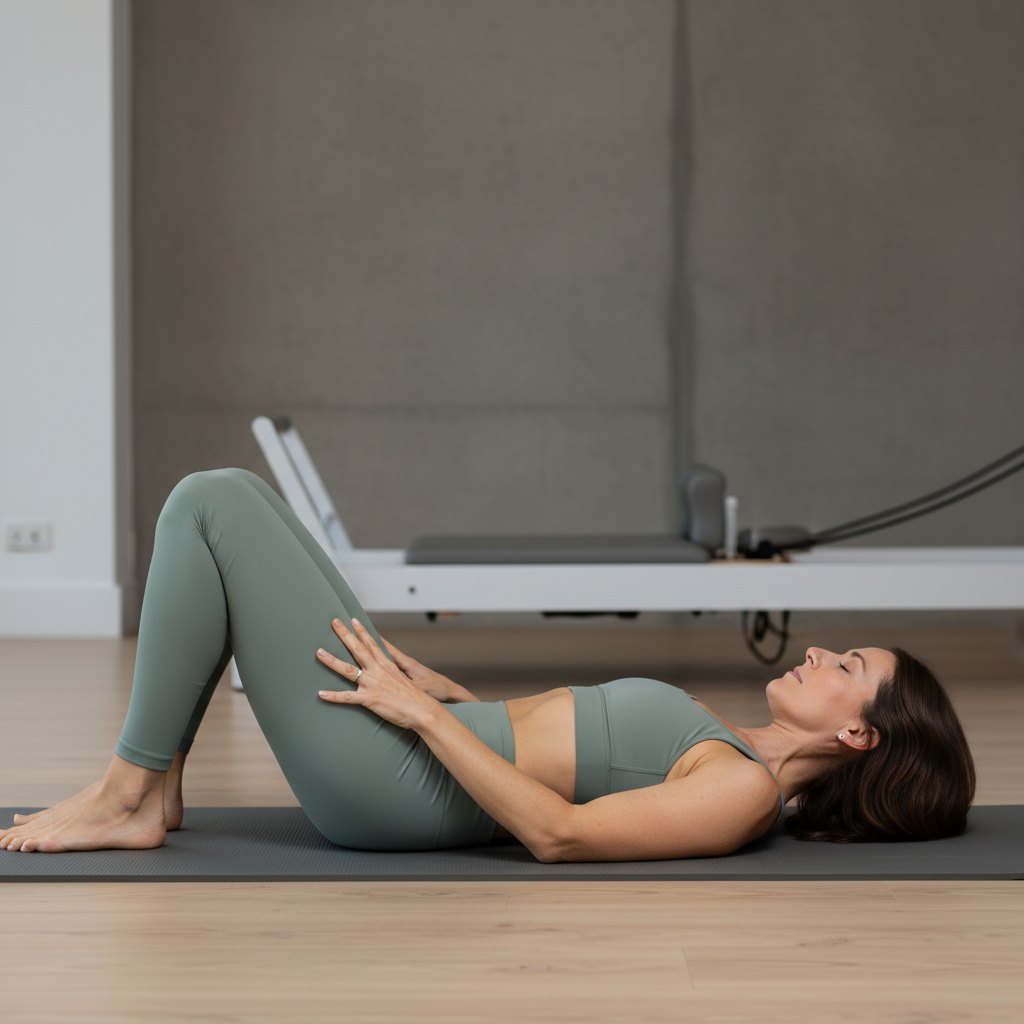
1) Breath that organizes your ribs
Try a quiet inhale that expands the lower ribs 360 degrees, then exhale as if fogging a mirror, letting ribs soften down without forcing them. Many bodies find core engagement more naturally on the exhale.
2) “Neutral” is a range, not one perfect angle
Neutral spine means your pelvis and ribs can stay stacked while you move arms or legs. If you feel you must tuck hard to “find core,” you might be skipping deep control and using glutes as a brace.
3) Shoulder blades slide, not squeeze
Instead of pinching shoulder blades together, think “wide collarbones” and let blades glide down and around the ribcage. This often reduces neck tension during core drills.
4) Slow reps, honest range
Pilates Training usually rewards smaller ranges done cleanly. If your low back arches, ribs flare, or neck strains, shorten the lever or bend the knees.
A simple 15–20 minute routine for core and posture (beginner-friendly)
Do this 2–4 times per week. Keep the effort around a 6–7 out of 10, where you feel work but can keep breathing.
Warm-up (3–4 minutes)
- Supine breathing: 5 slow breaths, exhale to feel ribs soften.
- Pelvic clock: 6–8 gentle circles, small range.
- Cat-cow: 6 reps, move through upper back as much as low back.
Core + posture circuit (2 rounds)
- Dead bug (Pilates-style): 6–8 reps/side, move only as far as ribs stay quiet.
- Glute bridge with exhale: 8–10 reps, avoid flaring ribs at the top.
- Side-lying clamshell: 10–12 reps/side, pelvis stays stacked.
- Swimming prep: 6–8 slow lifts, think length, not height.
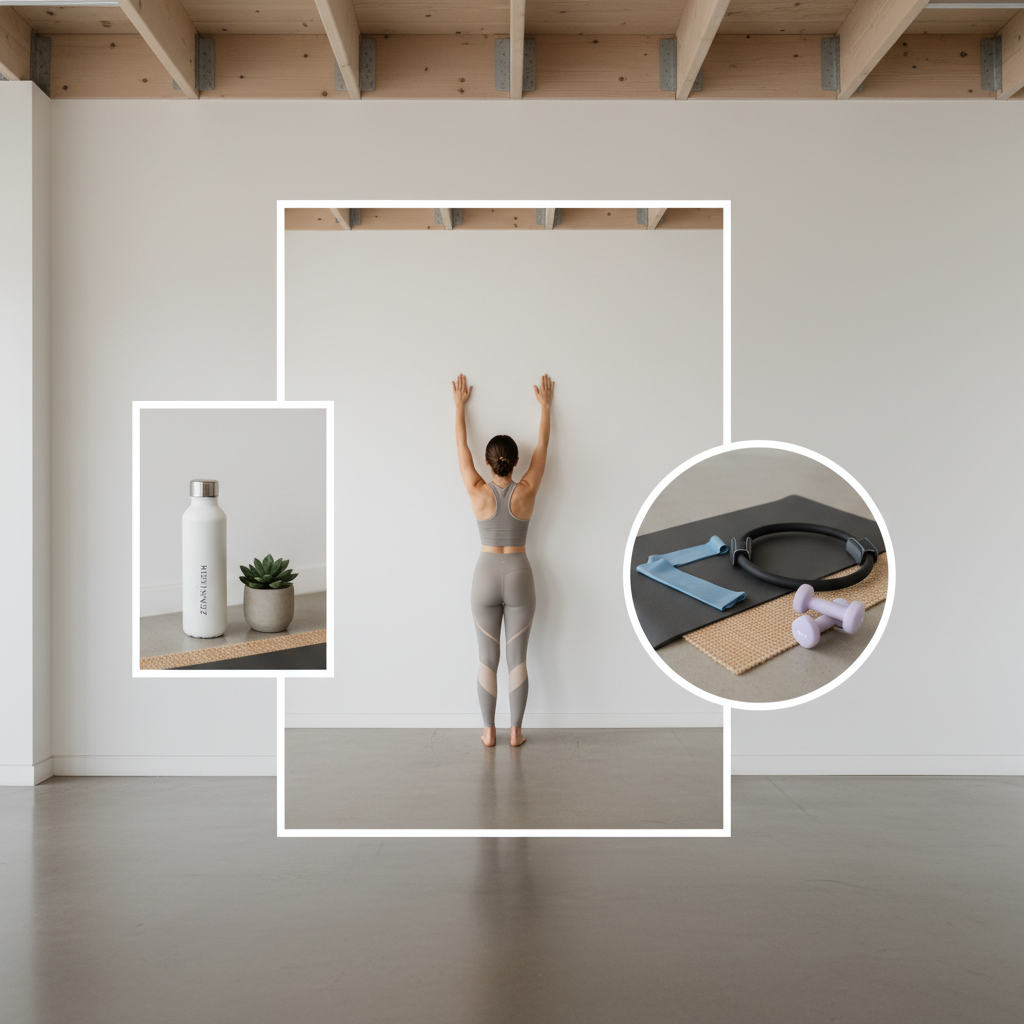
- Wall angel (easy range): 6–10 reps, neck relaxed.
Finish (1–2 minutes)
- Child’s pose with side reach: 2 breaths each side.
- Standing reset: feel feet, soften ribs, long back of neck for 2 breaths.
If you want one rule: quality beats quantity. When form slips, your body rehearses the same posture you’re trying to change.
Progression plan: how to scale up without irritating your back or neck
Most people progress too fast by adding range or intensity before control shows up. Use one lever at a time.
| Goal | What to change | Example | Good sign you’re ready |
|---|---|---|---|
| More core control | Longer lever | Dead bug: straighter leg | Ribs stay down, breathing steady |
| Better posture endurance | Time under tension | Wall angel: slower tempo | Neck stays relaxed |
| Hip stability | Less support | Bridge: march at top | Pelvis doesn’t shift side to side |
| Upper-back strength | Load (light) | Swimming prep: add 1–2 lb weights | No low-back pinching |
According to the National Academy of Sports Medicine (NASM), posture and movement quality are influenced by both mobility and stability, so it’s common to pair stretching with controlled strengthening instead of choosing only one.
Common mistakes that make Pilates feel ineffective
- Holding your breath: it often turns “core work” into neck and hip flexor work.
- Going too big too soon: large leg lowers, big spine flexion, or fast reps can overwhelm control.
- Chasing the burn: deep core work may feel quieter than you expect, especially early on.
- Over-cueing posture: forcing shoulders back can irritate the neck and create rib flare.
- Skipping consistency: posture changes tend to come from repeated, moderate practice, not heroic sessions.
One more honest point: Pilates Training works best when your day supports it. If you do 20 minutes of beautiful practice and then sit crumpled for six hours, your body still learns the six hours.
When to get a professional eye on it
A good instructor or physical therapist can spot compensations you can’t feel yet. Consider extra help if you notice any of the following.
- Pain that escalates during or after sessions, or pain that wakes you at night
- Numbness, tingling, radiating symptoms, or unexplained weakness
- Recent injury, surgery, pregnancy or postpartum concerns, or osteoporosis risk
- You keep feeling Pilates in the neck, low back, or hip flexors no matter how much you modify
According to the American Physical Therapy Association (APTA), individualized assessment can help match exercises to your specific limitations and goals, especially when pain is involved.
Practical weekly schedule (so it doesn’t turn into another abandoned plan)
If you want structure without overthinking, try this for 3–4 weeks and adjust based on how you recover.
- 2 days/week: do the 15–20 minute routine, keep it easy and consistent
- +1 optional day: add a longer session or a class focused on technique
- Daily micro-reset (2 minutes): 3 breaths with ribs stacked, 10 wall slides, short walk break
Key points to remember:
- Stack ribs over pelvis, breathe quietly, then move
- Modify early so the “right muscles” get the message
- Consistency beats intensity for posture changes
Conclusion: what to do next
Pilates Training helps most when you treat it like skill practice: breath, alignment, then controlled movement. If your goal is a stronger core and better posture, the fastest win usually comes from smaller ranges, cleaner reps, and a weekly plan you can repeat without dreading it.
Pick the routine above, run it for two weeks, and keep notes on two things only: where you feel effort and whether your breathing stays steady. If either drifts, scale the move and keep going.
FAQ
How often should I do Pilates Training for posture improvements?
Many people do well with 2–4 sessions per week, plus short daily posture resets. Posture shifts tend to respond to repetition and endurance, not one long workout.
Can Pilates help with low back pain from sitting?
It may help, especially if the discomfort relates to stiffness, weak trunk control, or poor movement habits. If pain is sharp, radiating, or worsening, it’s safer to consult a qualified professional.
Why do I feel Pilates mostly in my hip flexors?
Often it’s a leverage issue: legs act like heavy levers and the deep core can’t keep ribs and pelvis organized yet. Bending knees, reducing range, and focusing on exhale control usually helps.
Is Pilates better than weight training for core strength?
They do different jobs. Pilates emphasizes control, alignment, and endurance, while strength training can build capacity under load. Many people get the best results combining both in a balanced week.
Do I need a reformer to improve core and posture?
No. A mat routine can be enough, especially early on. Equipment can add variety and support, but consistent basics often matter more than the tool.
How long until I notice changes?
Some people notice improved body awareness within a few sessions, while visible posture endurance can take weeks. Your baseline, stress, sleep, and daily sitting time all influence the timeline.
What’s a good sign I’m doing the exercises correctly?
You can keep breathing, your neck stays relatively relaxed, and you feel effort in the trunk, glutes, or upper back depending on the move. If you feel pinching or joint pain, modify.
If you’re trying to fix slouching and core weakness but keep getting stuck on cues and modifications, it can be easier to follow a guided Pilates Training plan from a qualified instructor, especially one who can watch your form and tailor progressions to how your body responds.