
Weight training tips for beginners are mostly about staying safe long enough to get strong, because the fastest way to quit is getting hurt in week two.
If you’re new, it’s normal to feel pulled between “lift heavy to see results” and “go light so nothing goes wrong.” The good news is you don’t have to choose, you just need a few simple rules: solid technique, smart exercise choices, and a plan for progress.
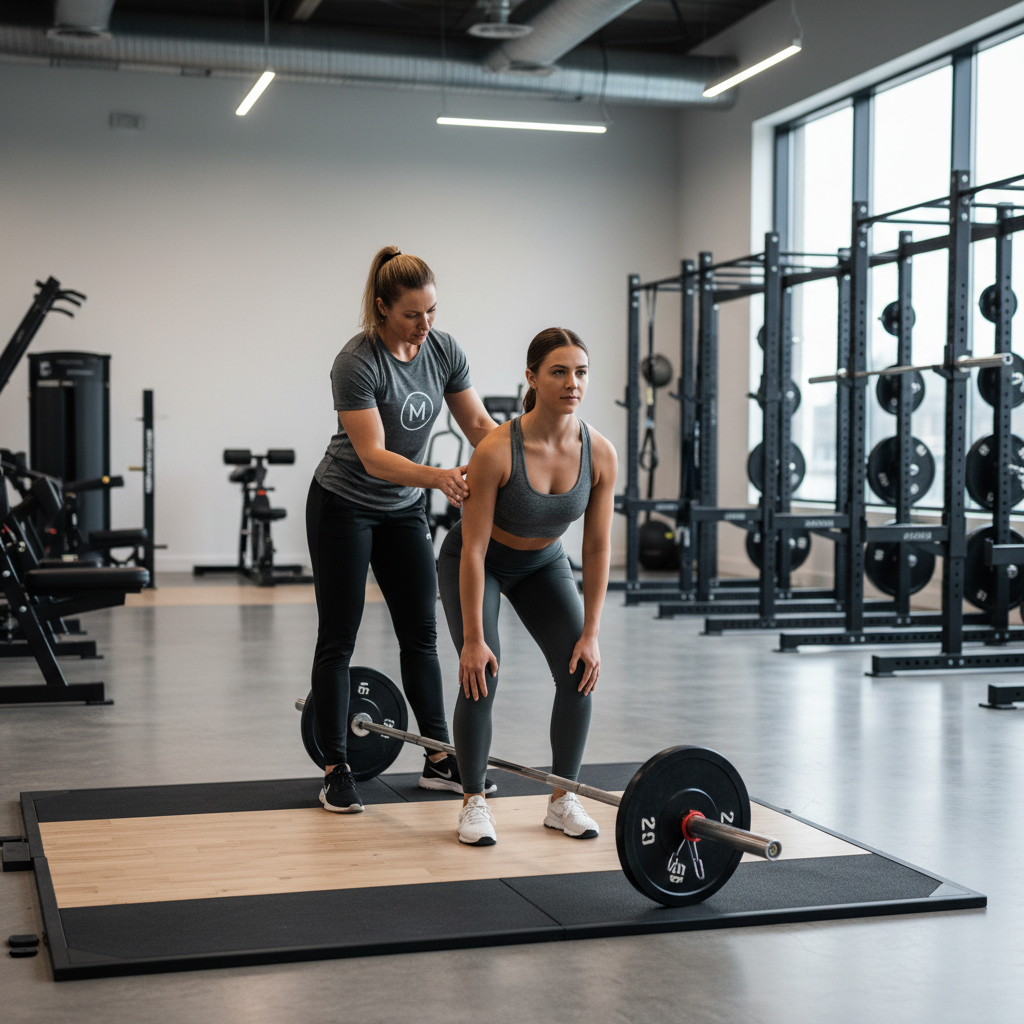
This guide walks you through what matters most: how to set up your first workouts, how to pick weights, what “good form” really means, and how to know when discomfort is normal versus a red flag. It’s not about perfection, it’s about repeatability.
Start with the right safety mindset (it’s not “go easy”)
In real gyms, beginners usually get into trouble two ways: rushing load increases, or copying advanced routines that assume years of joint and tendon conditioning.
According to the Centers for Disease Control and Prevention (CDC), muscle-strengthening activities should be done at least two days per week, with a focus on proper technique and gradual progression. That’s a simple benchmark, but the “how” matters.
- Train with 1–3 reps in reserve: finish most sets feeling like you could do a couple more reps with clean form.
- Practice before you push: your first weeks are skill-building, not testing willpower.
- Consistency beats intensity: a plan you can repeat without flare-ups wins.
One more honest note, soreness is common, sharp or growing pain usually is not. When in doubt, back off and reassess.
Pick beginner-friendly exercises (stable, scalable, easy to learn)
Many weight training tips online treat all lifts like equal choices. They aren’t. Early on, you want movements that let you control your body and the weight without complicated setups.
Good “starter” patterns
- Squat pattern: goblet squat, box squat, leg press (if available)
- Hinge pattern: Romanian deadlift with dumbbells, hip hinge with dowel, trap-bar deadlift if coached
- Push: incline push-up, dumbbell bench press, machine chest press
- Pull: one-arm dumbbell row, lat pulldown, seated row
- Carry/core: farmer carry, dead bug, side plank
Exercises that often cause beginner headaches
- Barbell back squat without coaching, mobility limits show up fast
- Barbell deadlift from the floor, great lift but easy to rush
- High-volume overhead pressing when shoulder control is shaky
This doesn’t mean you must avoid barbells forever, it just means you earn complexity after you own the basics.
Use this “quick self-check” before every set
The fastest way to make your sessions safer is a repeatable checklist you actually remember mid-workout. Keep it simple.
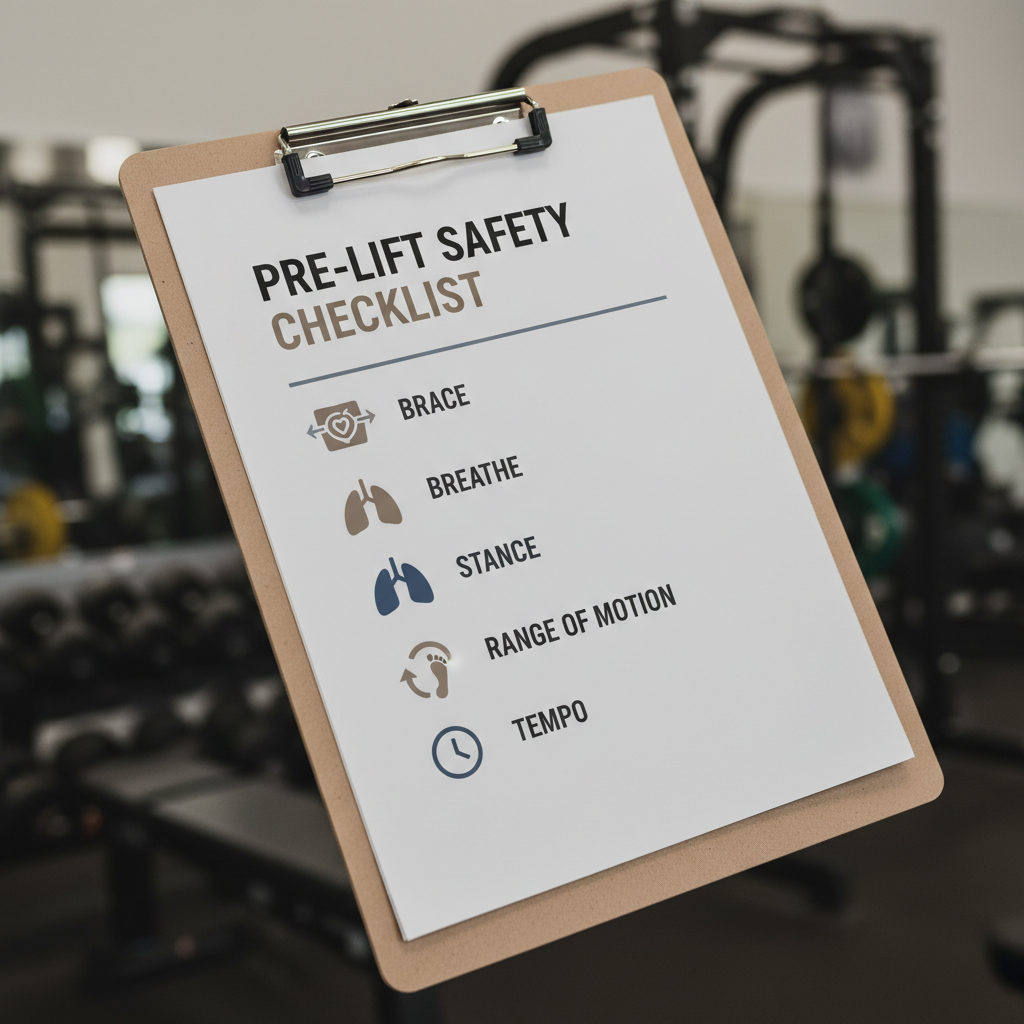
- Breathing: inhale to brace before the effort, exhale through the hard part (many people hold their breath too long).
- Brace: tighten your trunk like you expect a light punch, not a full “crunch.”
- Range of motion: stop where you can still control the position, especially at the bottom.
- Speed: lower with control, no dropping into joints.
- Tracking: knees and elbows generally follow the direction of toes and hands, not collapsing inward.
If you can’t keep those points while finishing the set, the weight (or the reps) is probably too high for today.
How heavy should you lift? A beginner-friendly loading rule
Most people guess too heavy on day one, then guess too light for months. A better approach is choosing a weight that teaches you what “smooth reps” feel like.
Try this for your main lifts:
- Pick a weight you can do for 8–12 reps with steady tempo.
- Stop with 1–3 reps in reserve, your last rep should still look like the first rep.
- Do 2–4 sets per exercise, rest 60–120 seconds depending on breathing and heart rate.
According to the American College of Sports Medicine (ACSM), beginners typically benefit from moderate loads and controlled progression while learning technique. Translation: don’t chase maxes yet, chase high-quality reps.
A simple 2–3 day beginner plan (and how to progress)
If you want practical weight training tips, start with a plan that repeats the same patterns, because repetition is how your form gets reliable. Here are two options that work for many beginners.
Option A: Full-body, 3 days/week (Mon/Wed/Fri style)
- Goblet squat: 3 x 8–12
- Dumbbell bench press: 3 x 8–12
- Lat pulldown: 3 x 8–12
- Romanian deadlift (DB): 2–3 x 8–10
- Farmer carry: 3 x 30–60 seconds
Option B: Full-body, 2 days/week (busy schedule-friendly)
- Leg press: 3 x 10–12
- Seated row: 3 x 8–12
- Incline push-up or machine chest press: 3 x 8–12
- Hip thrust or glute bridge: 2–3 x 10–12
- Dead bug: 3 x 6–10 per side
Progression that won’t surprise your joints
Use a “double progression” rule:
- Keep the same weight until you hit the top of the rep range for all sets with clean form.
- Then increase the load a small amount next session, many people do 2.5–5 lb jumps for upper body and 5–10 lb for lower body, but machines and dumbbells vary.
If your form slips after adding weight, step back and rebuild. That’s not failure, that’s smart training.
Common mistakes that quietly cause injuries
In beginner lifting, problems usually come from small habits repeated for weeks, not one dramatic moment.
- Skipping warm-ups: even 5–8 minutes of light cardio plus 1–2 lighter sets per lift makes a difference.
- Changing routines constantly: novelty feels productive, but it blocks skill practice.
- Training to exhaustion every set: it turns technique into survival mode.
- Ignoring recovery: poor sleep and high stress often show up as cranky elbows, shoulders, or low back.
- “Ego” range of motion: partial reps can have a place, but beginners often use them to hide loss of control.
If you only remember one thing, protect your form when you’re tired, that’s the moment your body starts bargaining.
Safety essentials: gear, setup, and a quick reference table
You don’t need much equipment, but a few choices reduce risk and make training feel more stable.
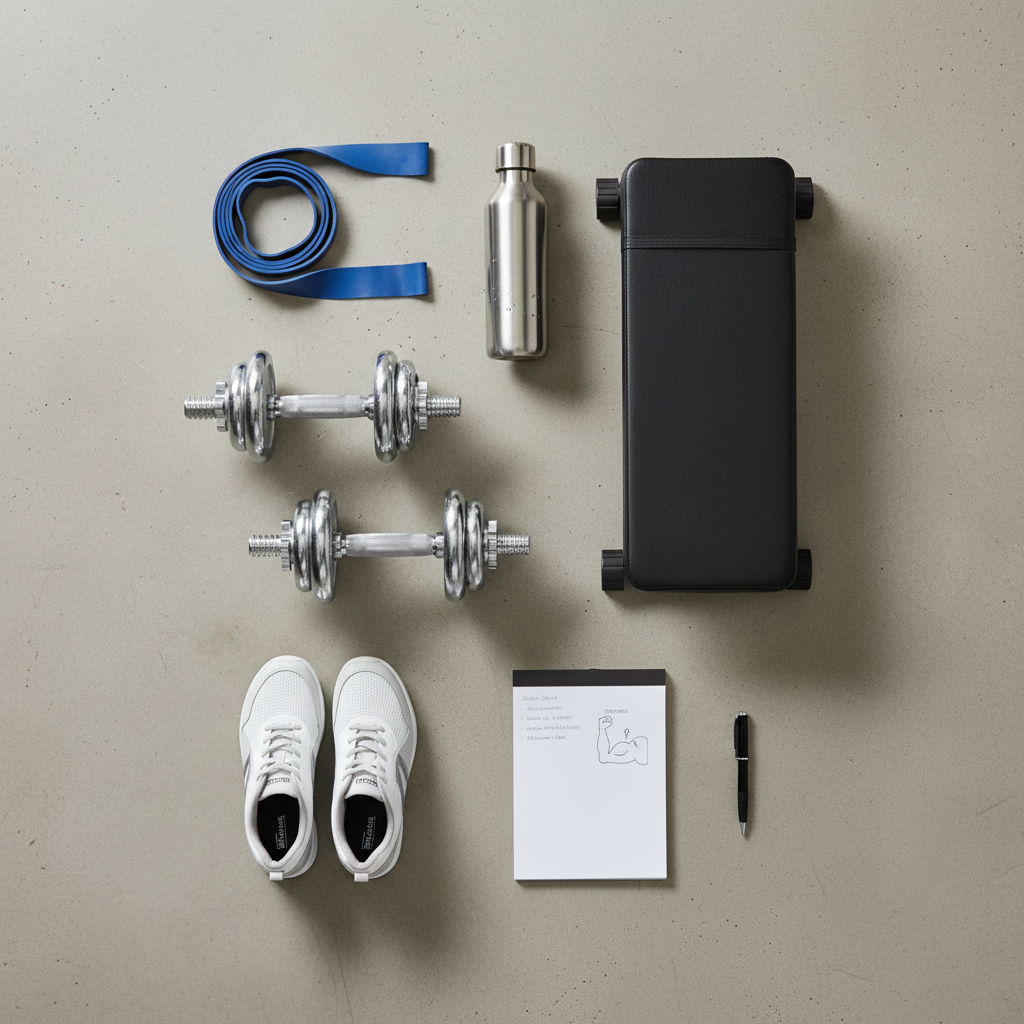
Quick table: what to do, and why it helps
| Safety move | Why it matters | Beginner-friendly example |
|---|---|---|
| Use stable footwear | Improves balance and force transfer | Flat trainers for lifting days |
| Set safeties or use a spotter | Reduces risk when strength fails mid-rep | Power rack safeties for bench/squat |
| Track sets and loads | Prevents random jumps and overdoing it | Notes app: weight, reps, effort (RIR) |
| Keep rest honest | Too little rest ruins form, too much kills flow | 60–120 seconds for most sets |
| Prioritize control over speed | Protects joints and builds skill | 2 seconds down, 1 second up |
Key takeaways to keep in your notes
- Clean reps are your main goal in the first month.
- Small progress weekly beats big progress one day.
- Simple routines make it easier to see what works and what irritates you.
When to get extra help (and when to stop)
Most beginners can learn safely with a conservative plan, but certain situations deserve professional eyes.
- Stop and reassess if pain feels sharp, radiates, causes numbness/tingling, or changes your movement pattern.
- Consider a coach if you feel lost setting up compound lifts, or you keep “feeling it” in your low back and neck.
- Talk to a clinician if you have a recent surgery, uncontrolled blood pressure, or a history of joint instability. In those cases, individualized guidance matters.
According to the National Academy of Sports Medicine (NASM), movement quality and appropriate progression are central to reducing injury risk in resistance training. If your movement quality is questionable, getting a form check can save months of frustration.
Conclusion: your next safe step
The best beginner plan is the one you can repeat, week after week, without turning every session into a test. Stick to stable exercises, keep a couple reps in reserve, and earn heavier weights by making your reps look the same from start to finish.
If you want an easy action step today, pick one full-body option above, run it for four weeks, and write down loads and reps every session. That tiny habit makes progress feel obvious, and it keeps your choices honest.
FAQ
What are the most important weight training tips for beginners who feel intimidated?
Start with machines and dumbbells, keep the goal as “repeat clean reps,” and track only a few lifts. Intimidation fades faster when your plan stays simple and familiar.
How long should a beginner weight training workout take?
Many people do well with 35–60 minutes. If sessions creep longer, it often means too many exercises or too much phone-time between sets.
Should I lift heavy or light to avoid injury?
Neither extreme helps. Moderate loads you can control usually work best early on, and you can get stronger by adding reps and small weight increases over time.
Is soreness after lifting a sign I did it right?
Not necessarily. Mild soreness can be normal, especially when you’re new, but good training can happen with little soreness too. Judge progress by better reps, more reps, or slightly more load.
How many days a week should beginners do strength training?
Two to three days per week works for many schedules and recovery levels. If you’re very sore for multiple days, reduce volume before you add more days.
What should I do if my lower back hurts during squats or deadlifts?
Stop the set, reduce load, and try a simpler variation like a goblet squat or dumbbell Romanian deadlift with a shorter range of motion. If the discomfort persists or feels sharp, it’s smart to get a form check or medical advice.
Do I need supplements to see results from lifting?
No. A basic protein target and consistent training usually matter more than supplements. If you use anything, consider discussing it with a qualified professional, especially if you have medical conditions.
If you’re trying to build a routine but keep second-guessing form, exercise choices, or progression, a single session with a qualified trainer for technique checks can be a surprisingly efficient shortcut, even if you plan to train solo afterward.