
Beginner fitness plan questions usually sound simple, but the real pain is not knowing what to do on Monday, how hard to push, and how to avoid quitting by week two.
If you want a plan that feels doable, the trick is balancing three things: full-body strength, easy-to-moderate cardio, and recovery that actually fits your life. You do not need fancy equipment, and you do not need to “earn” the right to start by getting in shape first.
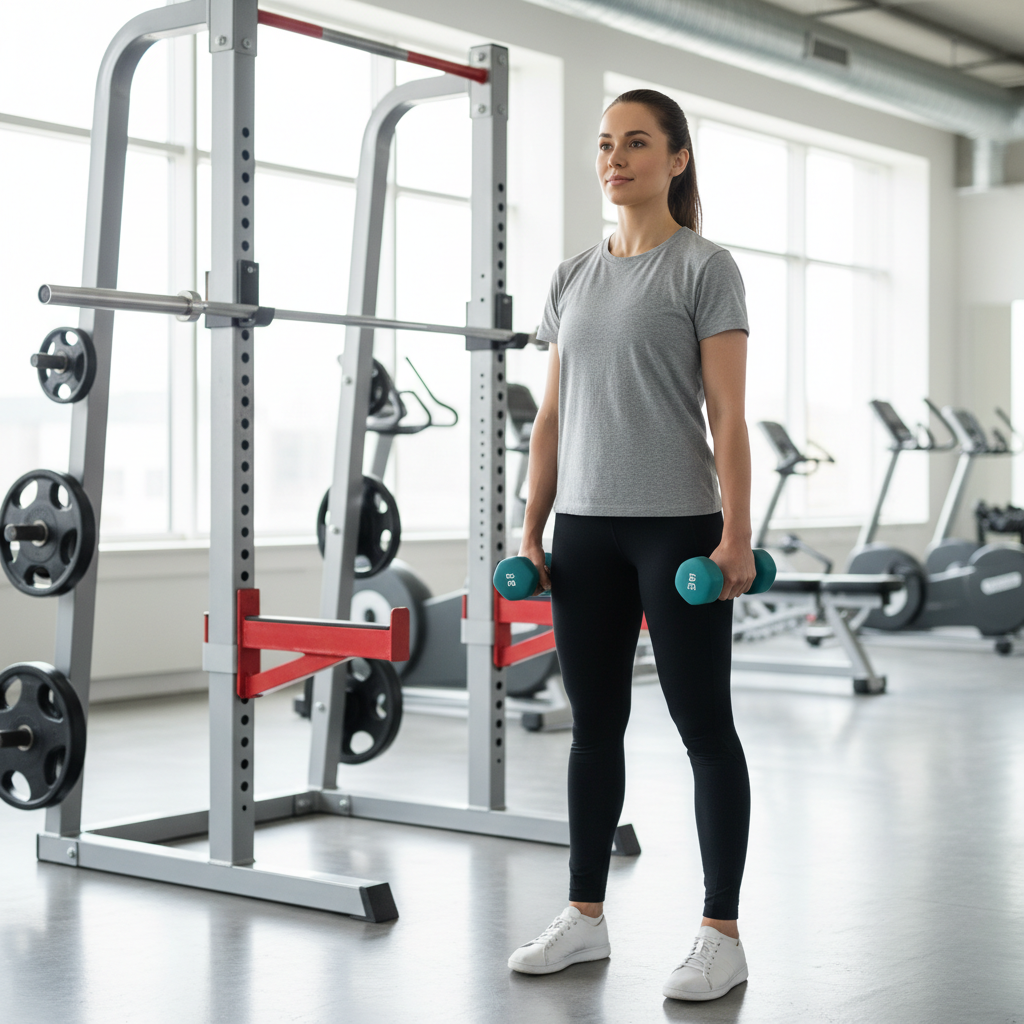
Below is a practical structure you can follow for 4 weeks, plus a few “if this, then that” adjustments, because real bodies and real schedules vary.
What a good beginner plan actually does (and why most fail)
A solid beginner fitness plan does not chase soreness, it builds skills and consistency. Many programs fail beginners because they assume you already know how to pace effort, recover, and progress.
- It limits choices: fewer exercises, repeated often, so you learn form and track progress.
- It manages intensity: you finish sessions feeling worked, not wrecked, which keeps you coming back.
- It protects joints and tendons: those tissues adapt slower than your motivation.
- It gives a progression path: small increases in reps, weight, or time, not random “harder every day.”
According to the CDC, adults generally benefit from both aerobic activity and muscle-strengthening activity each week, which is why this plan includes both from day one, just scaled to beginner-friendly levels.
Quick self-check: choose the right starting level
Before you copy someone else’s routine, get clear on your starting point. This is less about ego and more about avoiding the classic early injury or burnout cycle.
Pick Level 1 if most of these are true
- You have not trained consistently in 6+ months
- 10 bodyweight squats feel challenging
- You get out of breath on stairs
- You are unsure about basic lifting form
Pick Level 2 if most of these are true
- You walk often and can do 10–15 squats comfortably
- You can commit to 3–4 workouts weekly
- You have access to dumbbells or a basic gym
If you have chest pain, dizziness, uncontrolled high blood pressure, or a recent injury, it is smart to check with a clinician or a qualified fitness professional before increasing activity.
The 4-week weekly schedule (simple, repeatable)
This structure stays the same for 4 weeks so your body can adapt. Your job is to show up and make tiny improvements, not reinvent the week.
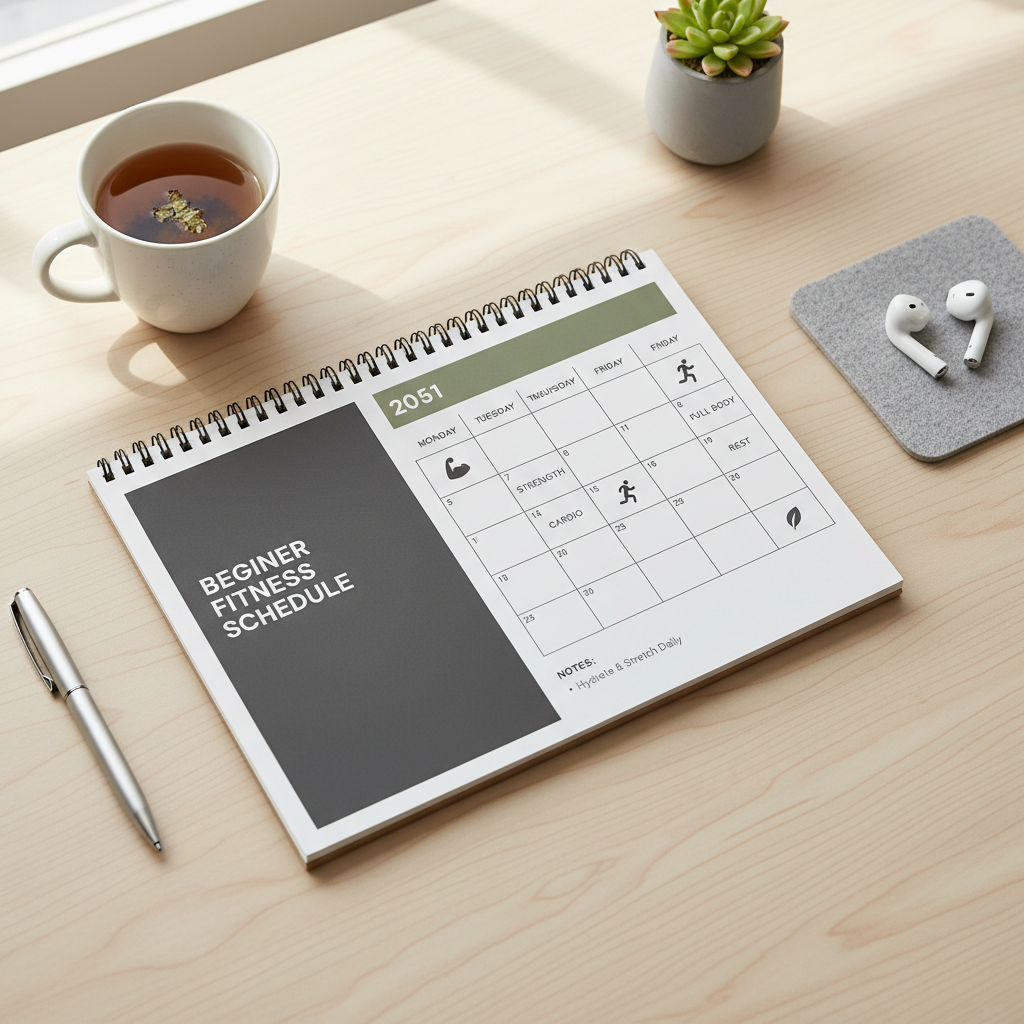
| Day | Workout | Time | Effort target |
|---|---|---|---|
| Mon | Full-body strength | 35–50 min | RPE 6–7 (2–4 reps left) |
| Tue | Easy cardio + mobility | 20–40 min | Comfortable conversation pace |
| Wed | Full-body strength | 35–50 min | RPE 6–7 |
| Thu | Rest or light walk | 15–30 min | Very easy |
| Fri | Full-body strength | 35–50 min | RPE 6–7 |
| Sat | Cardio (easy to moderate) | 25–45 min | Mostly easy, short pickups optional |
| Sun | Rest | — | — |
Key point: if three strength days feels like too much, keep the same beginner fitness plan but drop Friday strength and add a light walk instead. Consistency beats ambition.
Strength workouts: the beginner full-body template
Strength training is where most beginners either overcomplicate things or underload so much that progress stalls. Use a small menu of movement patterns and repeat them.
Warm-up (5–8 minutes)
- 3–5 minutes easy cardio: treadmill walk, bike, row
- 1–2 rounds: 8 bodyweight squats, 8 hip hinges, 8 wall push-ups, 20–30 seconds plank
Main lifts (35–40 minutes)
- Squat pattern: goblet squat or leg press, 2–3 sets of 8–12
- Hinge pattern: Romanian deadlift with dumbbells or hip thrust, 2–3 sets of 8–12
- Push: incline push-up or dumbbell bench press, 2–3 sets of 8–12
- Pull: one-arm dumbbell row or lat pulldown, 2–3 sets of 8–12
- Carry or core: farmer carry 3 x 30–60 seconds or dead bug 2–3 x 8/side
How hard should it feel?
Aim for sets where you could still do 2–4 more reps with good form. If your form breaks, the set is done even if the rep count says otherwise.
Cardio and steps: build your “engine” without hating it
Cardio does not have to mean running, and it definitely does not need to be punishment. For most beginners, the best results come from easy work done regularly.
- Easy cardio options: brisk walking, cycling, swimming, elliptical
- Start point: 20 minutes at a pace you can talk through
- Progression: add 5 minutes weekly until you reach 35–45 minutes
If you like structure, try “pickups” on Saturday: 6 rounds of 30 seconds slightly faster, 90 seconds easy. You should finish feeling energized, not crushed.

According to the American Heart Association, building aerobic activity gradually is a common recommendation, especially if you have been inactive, which is why this plan keeps cardio mostly easy at the start.
Progression rules: how to get results without guessing
This is where a beginner fitness plan becomes a real plan instead of a random collection of workouts. Keep progression boring and trackable.
- Reps first: stay in 8–12 reps, add reps until you hit the top of the range for all sets.
- Then add load: increase weight by the smallest jump available, then drop back to 8–9 reps and build again.
- One change at a time: do not increase weight and add extra sets in the same week.
- Deload if needed: if you feel run down for 7–10 days, reduce weight or sets for a week.
Simple tracking: write down exercise, weight, reps, and a quick note on how it felt. A notes app works fine.
Common mistakes that slow beginners down
Most “stuck” beginners are not lazy, they are just pulling the wrong levers.
- Going too hard too soon: soreness becomes the goal, then motivation disappears.
- Skipping warm-ups: the first heavy-ish set becomes your warm-up, and joints complain.
- Program hopping: changing routines weekly makes progress hard to see.
- All-or-nothing mindset: missing one day turns into missing two weeks.
- Ignoring sleep and protein: training feels harder when recovery basics are shaky.
According to the American College of Sports Medicine (ACSM), proper progression and recovery matter for long-term adherence and safety, and beginners typically benefit from conservative increases rather than constant max-effort sessions.
When to ask for professional help
If you are unsure about technique, even one session with a qualified trainer can save months of frustration. It is also worth seeking guidance if you have persistent pain that changes your movement, you are postpartum, or you manage conditions like diabetes, heart disease, or significant joint issues.
Form checks, appropriate modifications, and realistic load selection can make a beginner fitness plan feel safer and more sustainable, especially in the first month.
Practical “make it stick” tips (the part nobody wants to admit matters)
The best plan is the one you repeat. A few simple systems usually beat pure motivation.
- Set a minimum: “I will do 20 minutes” keeps you moving on low-energy days.
- Pack friction away: shoes by the door, gym bag ready, workout on your calendar.
- Keep food boring on weekdays: basic meals make recovery more predictable.
- Use a 2-day rule: avoid skipping workouts two times in a row.
Conclusion: your next 7 days
If you want this to work, treat the next week as practice, not a test. Do three full-body sessions, keep cardio easy, and track what you did, that alone puts you ahead of most people who start strong and fade.
Action steps: pick Level 1 or Level 2, schedule your three strength days right now, then choose one cardio option you do not dread.
FAQ
How long should a beginner fitness plan last before I change it?
Usually 4–8 weeks works well, assuming you can progress a little. If your numbers climb slowly and you recover well, there is no rush to change exercises.
Can I do this beginner fitness plan at home with no equipment?
Yes, with substitutions like bodyweight squats, split squats, glute bridges, push-ups against a counter, and rows using a backpack. Progress may rely more on reps, tempo, and range of motion.
Is soreness a sign the workout is working?
Not always. Mild soreness can happen, especially early on, but chasing it often leads to too much intensity. Better signs are improved reps, steadier form, and better energy week to week.
What if I only have 2 days per week?
Do two full-body strength workouts and add 1–2 short walks. Keep the same movement patterns, just do 3 sets per exercise to make the sessions count.
Should beginners do HIIT?
Many beginners can, but it is often not necessary right away. If you try it, keep it short and controlled, and stop if you feel lightheaded or your form collapses.
How do I know if I am lifting too heavy?
If you cannot keep consistent technique, you hold your breath excessively, or reps slow down dramatically, the load is probably too high. Dropping weight and owning the movement usually pays off faster.
Do I need supplements for this plan?
Most people do fine starting with basics: adequate protein, fruits and vegetables, and sleep. Supplements can be helpful in some cases, but it depends on diet and health status, and a clinician can help if you have concerns.
If you are trying to build a beginner fitness plan around a busy schedule, limited equipment, or an old injury that makes “standard” moves feel sketchy, a short consult with a coach or physical therapist can help you customize without overthinking every workout.