
What to put in a bike saddle bag comes down to one thing: carrying what solves common ride-ending problems, without hauling half your garage.
Most riders either under-pack and get stranded by a simple flat, or over-pack and end up with a bouncing bag that annoys them every mile. The sweet spot is a small, reliable “rescue kit” built around your tire setup, ride length, and how far you’ll be from help.
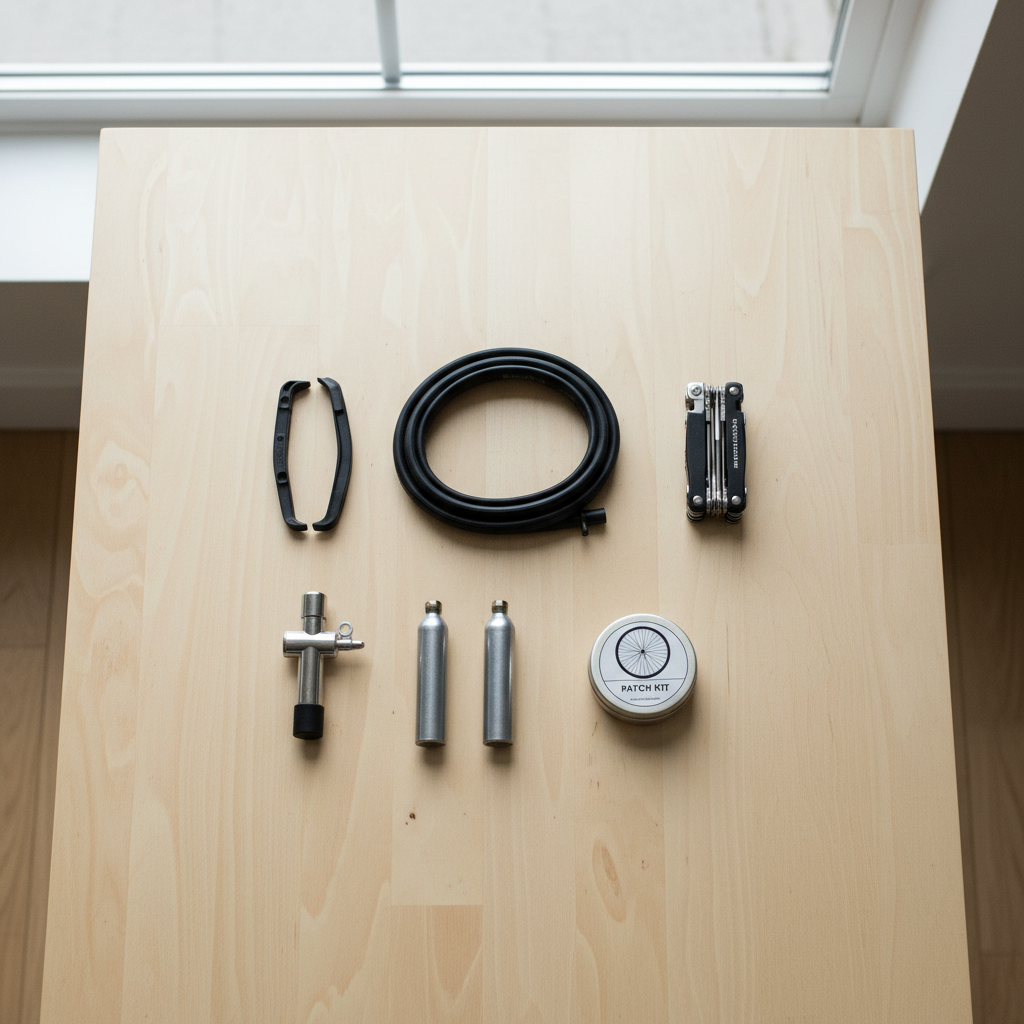
This guide gives you a realistic packing list, a quick self-check to avoid the wrong items, and a few small upgrades that make roadside fixes less stressful. I’ll also point out the “popular” stuff that often wastes space.
Start with the non-negotiables (the core kit)
If you ride long enough, flats and minor mechanical hiccups stop being “if” and become “when.” A saddle bag works best when it carries the small tools that handle those predictable moments.
- Tube or tire plug solution (based on your tire type)
- Tire levers (usually 2, sometimes 3 for tight beads)
- Inflation method: CO2 inflator + cartridge(s) or a mini pump
- Compact multi-tool with the hex sizes your bike actually uses
- Patch kit (even if you carry a tube, patches are the backup)
According to NHTSA, being visible and predictable around traffic reduces crash risk, so even if your saddle bag is “repair-focused,” it’s smart to leave room for at least one visibility or signaling item on rides that touch roads.
Match your packing list to your tire setup (tubes vs tubeless)
A lot of confusion around what to put in a bike saddle bag comes from copying someone else’s list without matching their tire system. That’s how you end up carrying gear you can’t use.
If you run inner tubes
- 1 spare tube (correct valve type and length)
- Patch kit for the second flat
- Tire boot or a folded dollar bill style “boot” for sidewall cuts
Tip: tubes fail more often from pinch flats, tiny glass cuts, or old rim tape than people expect, so a patch kit matters even on short rides.
If you run tubeless
- Tire plug kit (bacon strips / dynaplug style)
- Small valve core tool (if your kit doesn’t include it)
- CO2 or mini pump (seating a bead can be finicky with a tiny pump)
- Emergency tube (optional but often worth it on longer rides)
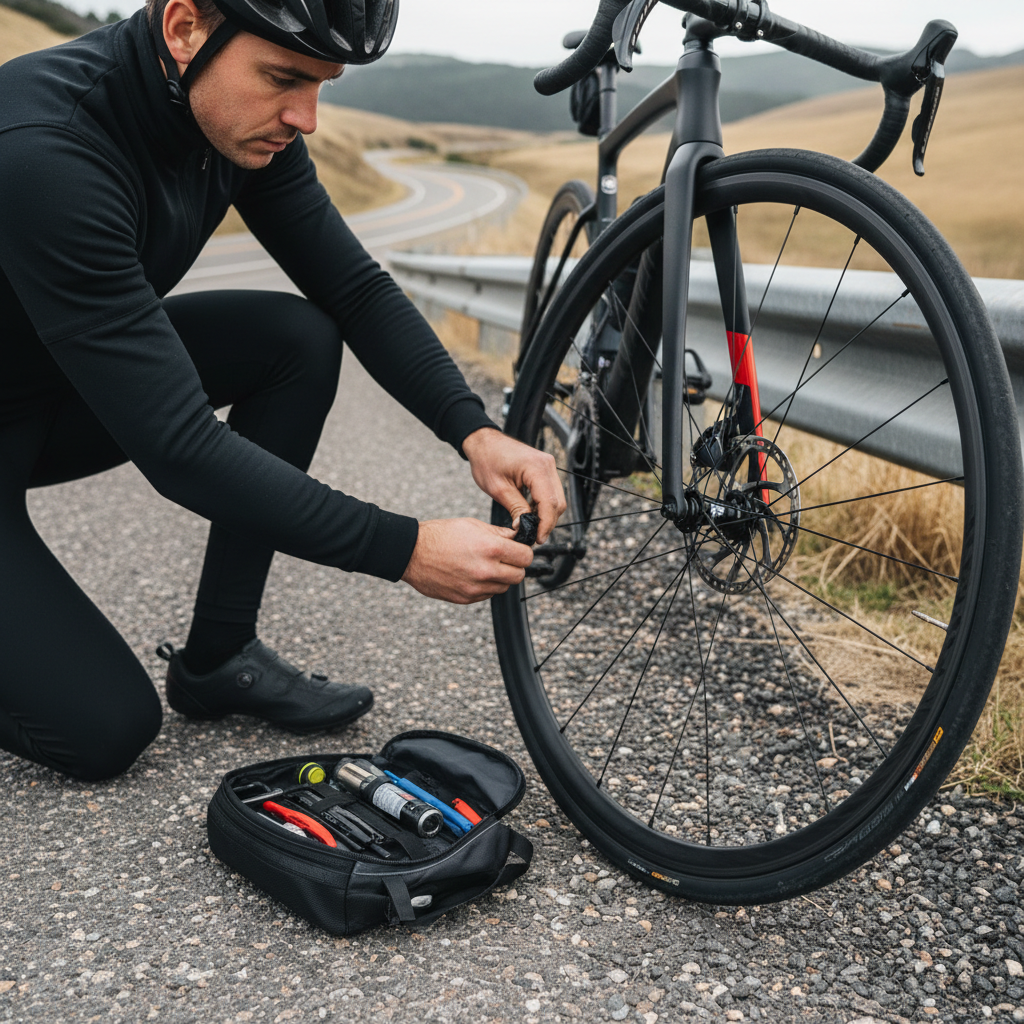
Reality check: tubeless sealant handles many small punctures, but when it doesn’t, you want a plug kit you’ve practiced with. The first attempt on the side of the road is rarely fun.
A quick “what kind of ride is this?” checklist
Before you decide what to put in a bike saddle bag, answer these fast questions. They keep you from packing for the wrong problem.
- How far from help? Riding near home differs from rural routes with poor cell coverage.
- Solo or group? In groups, you can share tools, but don’t assume someone else has a tube that fits.
- Road, gravel, or mixed? Gravel usually increases the odds of sidewall damage and chain issues.
- Weather and daylight? Short winter daylight can turn a delay into a visibility problem.
- Bike-specific hardware? Some bikes need Torx, a special axle lever, or uncommon hex sizes.
If you answered “far from help” plus “mixed surface,” your saddle bag probably needs one extra problem-solver beyond the bare minimum.
Practical saddle bag packing list (with a sizing guide)
Below is a realistic table you can use to build a kit without overstuffing. Think of it as tiers: pack what fits your bag size and ride risk.
| Item | Why it earns space | Best for |
|---|---|---|
| Spare tube (or tubeless plug kit) | Fixes the most common ride-stopper | All riders |
| 2 tire levers | Removes tight tires without destroying your thumbs | Most clincher setups |
| CO2 inflator + 1–2 cartridges | Fast inflation, good for higher pressures | Road and tubeless seating |
| Mini pump | Unlimited “air,” slower but dependable | Long rides, touring |
| Multi-tool (hex/Torx/Phillips as needed) | Handles loose bolts, saddle slip, lever tweaks | All riders |
| Patch kit + glue (or peel-and-stick) | Backup when you already used the spare | Longer rides |
| Quick link (master link) | Simple fix for a broken chain | Gravel, high-miles riders |
| Tire boot | Temporary fix for sidewall cut | Debris-heavy routes |
| Nitrile glove or small wipe | Keeps hands usable after a greasy chain | Commuters, group rides |
| Cash or card + ID | Plan B when repairs fail | Everyone |
Key takeaway: pack for “most likely,” not “everything”
- Short ride near home: tube/plug + levers + CO2 + multitool
- 2–4 hour ride: add patches, quick link, a second CO2 or mini pump
- Remote or all-day: add tire boot, more patches, maybe a tiny emergency light
How to pack it so it stays quiet, dry, and easy to use
The list matters, but packing order matters more than people admit. A saddle bag that rattles or ejects tools makes riders stop carrying it, which defeats the point.
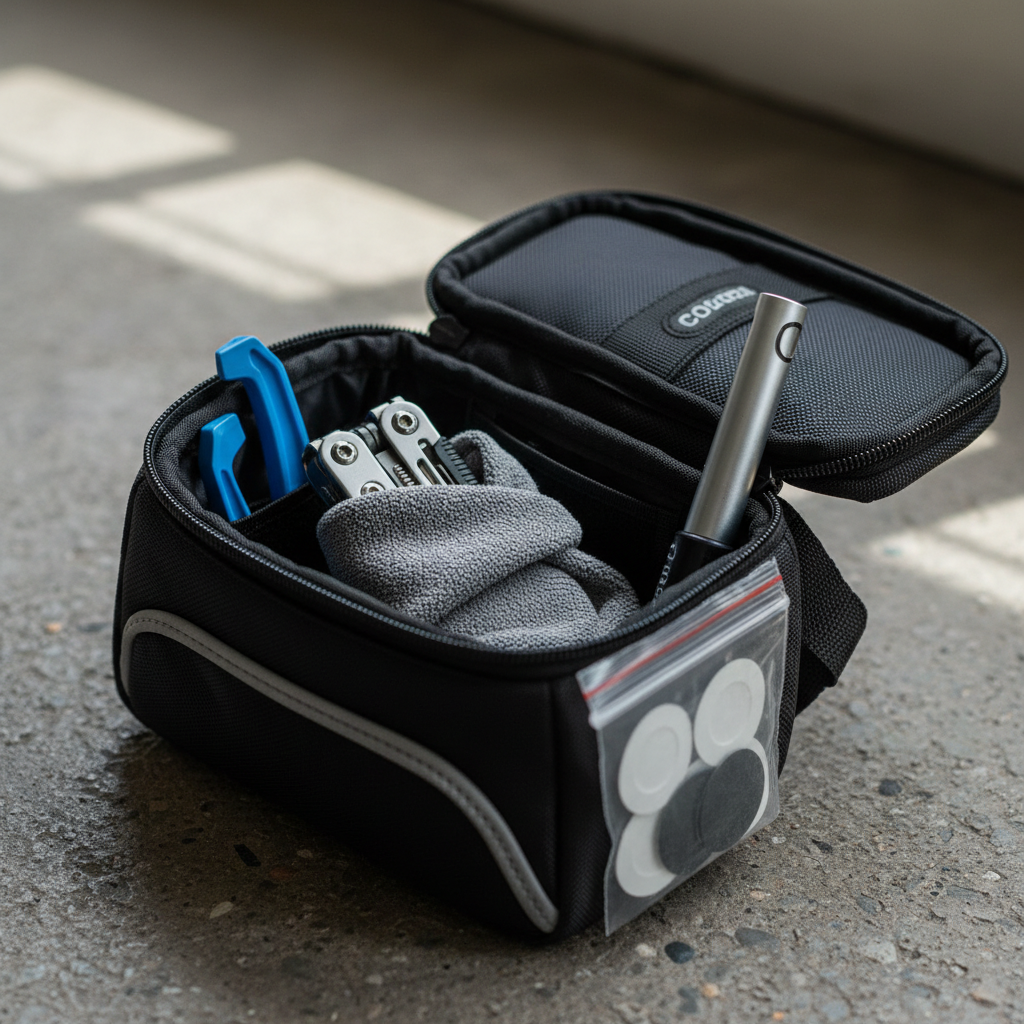
- Put the “first-use” items on top: levers, CO2 head, plug tool.
- Wrap metal tools in a small cloth or zip bag to prevent rattling.
- Keep patches and cash in a mini zip bag to reduce moisture issues.
- Check clearance: some bags rub the rear tire on full suspension or when the bag sags.
If you use CO2, make sure your inflator head and cartridge are compatible, and consider carrying one cartridge more than you think you need, since misfires happen, especially in cold weather.
Common mistakes that waste space (or fail when you need them)
Many “ultimate” lists ignore what riders actually touch during a roadside fix. A few swaps usually make your kit smaller and more reliable.
- Carrying a multi-tool that doesn’t fit your bike: check hex and Torx sizes at home.
- Bringing CO2 only, no backup plan: a mini pump can be slower but often saves the day.
- Old tubes with cracked rubber: if it’s been baking in a bag for years, replace it.
- Unopened patch kits: glue dries out, peel-and-stick ages, test once.
- Overpacking “just in case” items: bulky wrenches, big pliers, full-size lube bottles usually belong elsewhere.
Also, don’t underestimate the “I can’t get the tire back on” problem. If your tires are notoriously tight, consider levers designed for stiff beads and practice at home when you’re not stressed.
When to add safety and comfort extras (without turning it into luggage)
Not every saddle bag needs personal items, but a couple small additions can make delays safer, especially on roads or in changing weather.
- Micro rear light or a spare battery, if you ride near dusk
- Thin emergency layer only if your bag is large enough and conditions swing fast
- Small electrolyte tabs or a gel for longer rides, if you tend to bonk
Health note: fueling needs vary a lot; if you have a medical condition that affects hydration or blood sugar, it’s smart to ask a clinician what “emergency calories” should look like for you.
Conclusion: a simple way to build your kit today
If you’re still deciding what to put in a bike saddle bag, build it around flat repair, basic adjustments, and one backup option when the first fix doesn’t work. Then do one test: open the bag and confirm you can fix a flat using only what’s inside.
Action steps: pick your tire setup list, pack it once, and do a five-minute driveway practice. Your future self, stuck on a shoulder with a slow leak, will thank you.
FAQ
What should I always carry in a bike saddle bag for road cycling?
A tube (or plug kit if tubeless), tire levers, a reliable inflator method, and a multitool cover most road problems. If your routes are longer, add patches and a quick link.
Is a mini pump better than CO2 in a saddle bag?
Many riders like CO2 for speed, but a mini pump is more forgiving because it can’t “run out” after one mistake. For longer rides, carrying both is common if space allows.
How many CO2 cartridges should I pack?
For many road rides, one cartridge can work, but two often feels more realistic, especially if you might need a second attempt. Tire volume and desired pressure change this a lot.
What to put in a bike saddle bag for gravel rides?
Gravel usually benefits from a plug kit, a quick link, and a tire boot in addition to your flat kit. Sidewall damage and chain issues tend to show up more off pavement.
Do I need a patch kit if I carry a spare tube?
Often, yes, because the second flat is the one that ruins the day. A patch kit is small, cheap, and can rescue you when you’ve already used the spare.
How do I know if my multitool fits my bike?
At home, try tightening a few common bolts you might need mid-ride: stem, seatpost clamp, saddle rails, and bottle cages. If any bolt head doesn’t match, swap tools now, not roadside.
What’s the best size saddle bag for essentials?
Many riders do well with a small-to-medium bag that fits a tube, levers, inflator, and multitool without bulging. If you routinely add patches, quick links, and a boot, sizing up avoids zipper stress.
If you’re trying to streamline what to put in a bike saddle bag for your specific bike and tire setup, it can help to build a “base kit” and keep a second version for longer routes, so you’re not repacking from scratch every weekend.