
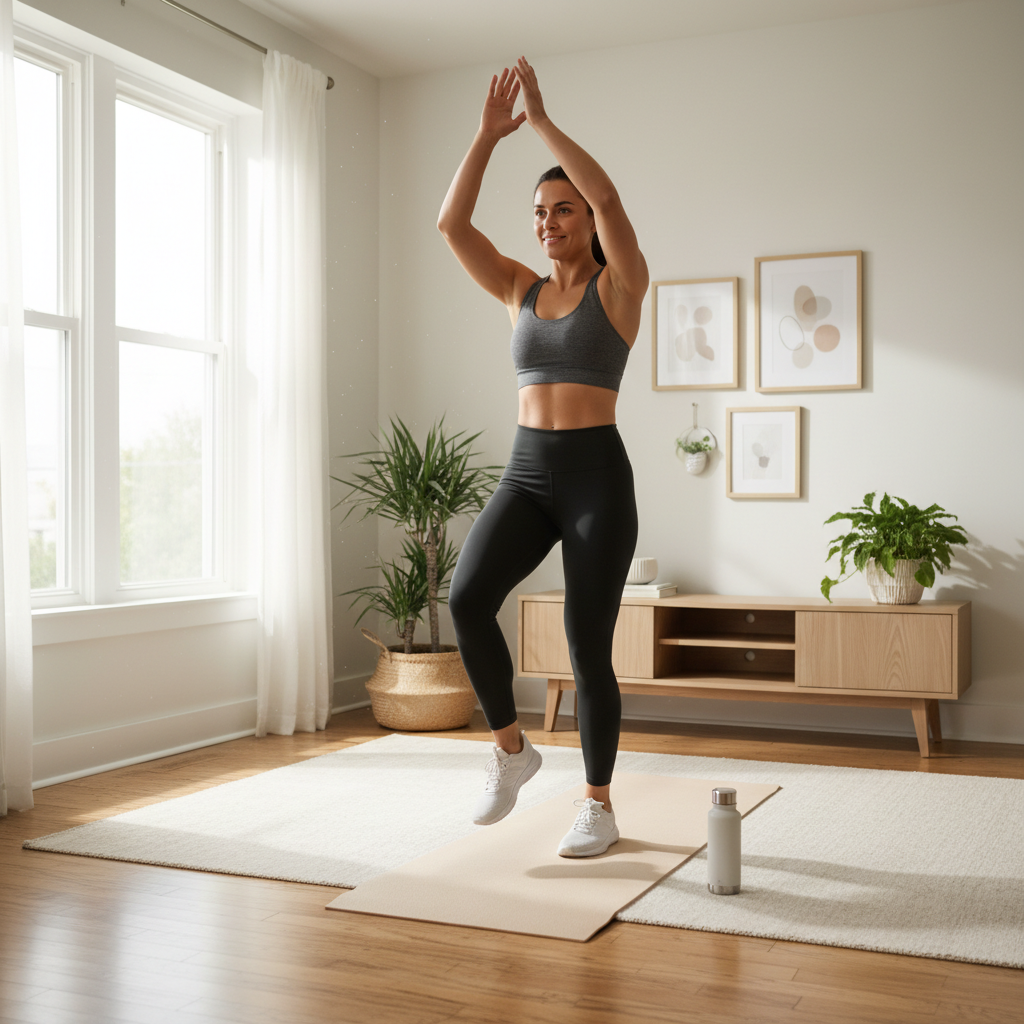
A cardio workout at home can be as simple as moving with intent for 10–30 minutes, no fancy gear, no perfect playlist, just a plan you can actually repeat.
If you’ve tried “home cardio” before and it fizzled out, it’s usually not a motivation problem, it’s a friction problem: too much jumping in an apartment, workouts that feel random, or pacing that goes from easy to miserable in 90 seconds.
This guide gives a few reliable formats you can rotate, a quick self-check to pick the right intensity, and a realistic weekly schedule. You’ll also see common mistakes that make people quit, plus what to adjust if knees, space, or time feel limiting.
Why home cardio feels hard (and how to make it easier)
Most people don’t fail because home cardio “doesn’t work,” they fail because the setup fights them. A few patterns show up all the time.
- The workout is too loud or high-impact, so you skip days to avoid bothering neighbors or flaring up joints.
- No pacing plan, so you sprint early, crash, and decide you “hate cardio.”
- Too many choices, so you spend more time browsing workouts than moving.
- All-or-nothing thinking, where anything under 30 minutes “doesn’t count,” so nothing happens.
Fixing this is mostly boring, in a good way: pick a repeatable routine, keep impact appropriate, and track one simple metric such as time, rounds, or perceived effort.
Quick self-check: choose the right intensity for today
Before you start, do a 20-second check. It prevents the common trap of pushing too hard on low-energy days, then skipping the next two sessions.
- Talk test: you can say a full sentence without gasping, you’re likely in a steady, sustainable zone. If you can only say a few words, you’re in hard intervals.
- Joint check: any sharp pain, swelling, or unstable feeling, keep it low-impact and consider professional guidance.
- Space + noise: if you’re on an upper floor, swap jumps for fast feet, step-outs, or shadow boxing.
- Time reality: if you only have 12 minutes, do 12 minutes, consistency beats an “ideal” plan you can’t keep.
According to American Heart Association, adults generally benefit from regular aerobic activity across the week; how you break it up can vary, and shorter sessions still count toward consistency.
8 easy moves that cover most home cardio needs
You can build a solid cardio workout at home from a small menu of moves. Keep 4–6 favorites and rotate, your body likes consistency more than novelty.
- March in place (add arm swings to raise heart rate)
- Step jacks (low-impact alternative to jumping jacks)
- High knees (low or moderate height) (or “fast marches” if impact bugs you)
- Mountain climbers (slow them down to protect wrists and hips)
- Skater steps (step behind instead of hopping for low impact)
- Shadow boxing (great when knees complain)
- Stair intervals (if you have safe stairs and a handrail)
- Burpee variation (step-back burpee instead of jump-back)
Key point: intensity comes more from speed, range of motion, and work-to-rest ratio than from “fancy” exercises.
Pick a format: three routines you can repeat
These options cover most situations: beginners, busy schedules, and people who want a sweat without wrecking tomorrow’s legs.
Routine A: 15-minute low-impact starter (no jumping)
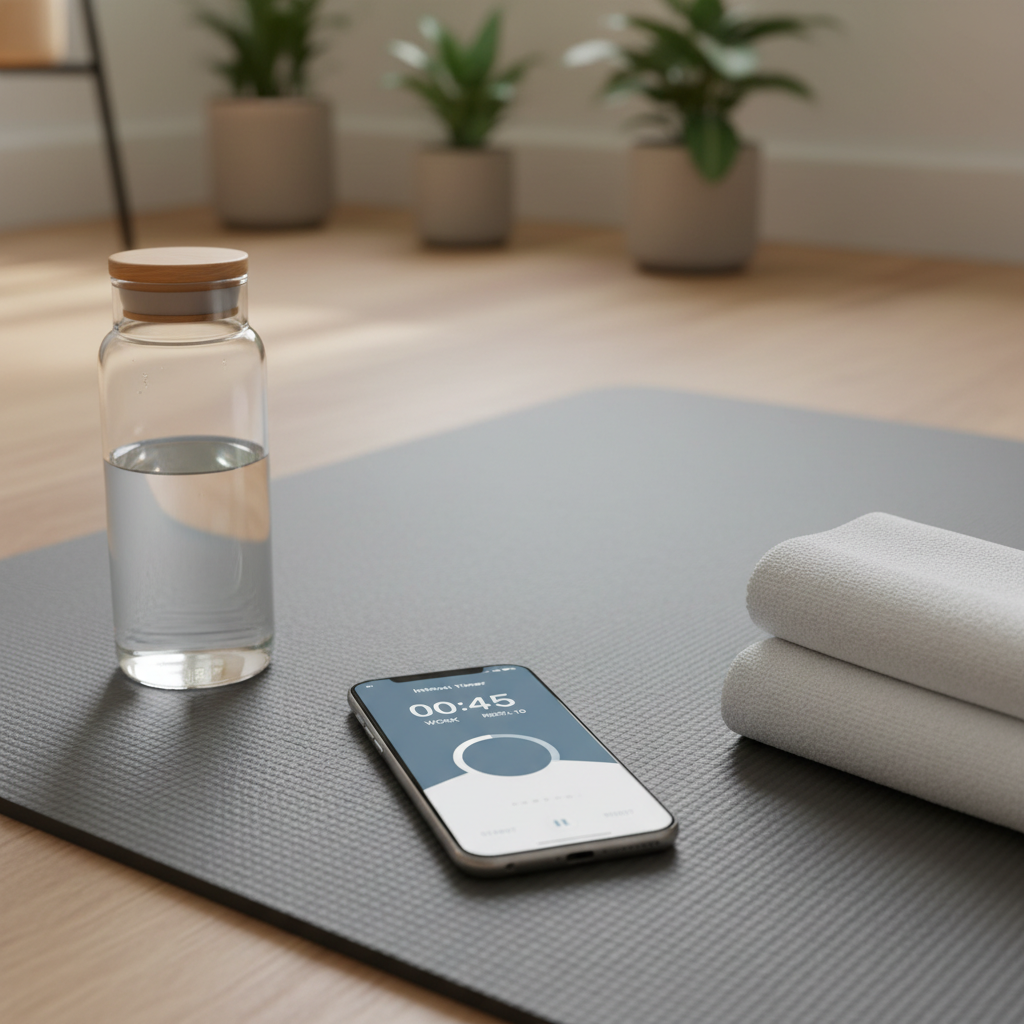
Do 40 seconds work, 20 seconds easy pace. Repeat the circuit twice.
- March in place (arms big)
- Step jacks
- Skater steps (no hop)
- Shadow boxing (light, fast hands)
- Mountain climbers (slow and controlled)
If breathing feels too spiky, shift to 30 seconds work, 30 seconds easy pace and keep going.
Routine B: 20-minute steady cardio (the “I can keep this up” day)
This is underrated and often the routine that makes people consistent. Set a timer for 20 minutes.
- Alternate 2 minutes brisk step-ups on a sturdy step (or stairs) with 2 minutes shadow boxing
- Keep effort at a level where you can talk in short sentences
- Every 5 minutes, take 30–60 seconds to sip water and reset posture
Many people notice better recovery and fewer sore days when they keep at least one session weekly at this steady pace.
Routine C: 12-minute HIIT (short, sweaty, not daily)
Work 30 seconds, rest 30 seconds, 2 rounds. Choose 4 moves.
- High knees or fast marches
- Mountain climbers
- Step-back burpee (no jump)
- Skater hops or skater steps
Rule that saves knees and motivation: keep HIIT to 1–3 times per week in many cases, and use low-impact options if joints feel cranky.
A simple weekly plan (and how to progress without overdoing it)
If you want structure, start here. It balances easier days with harder efforts, which usually keeps consistency high.
| Day | Session | Target effort |
|---|---|---|
| Mon | Routine A (15 min) | Easy to moderate |
| Tue | Walk or light mobility (15–30 min) | Easy |
| Wed | Routine B (20 min) | Moderate, steady |
| Thu | Rest or gentle movement | Easy |
| Fri | Routine C (12 min) | Hard intervals |
| Sat | Routine B or a longer walk (20–45 min) | Moderate |
| Sun | Rest | Easy |
Progression that tends to work: add time first, then add intensity. For example, take Routine A from 15 to 18 minutes for a week or two, only then tighten the rest periods.
Technique and safety notes people skip (then regret)
A cardio workout at home feels “safe” because it’s home, but form and setup still matter, especially on fast moves.
- Warm-up: 3–5 minutes of marching, arm circles, gentle squats. It reduces the shock of going from sitting to sprinting.
- Footwear: a stable sneaker can help on fast lateral steps; barefoot can feel fine for low-impact, but traction varies by floor.
- Wrist comfort: for mountain climbers, elevate hands on a sturdy bench or couch edge, keep shoulders stacked over wrists.
- Knee tracking: on step-ups and skater steps, keep knees generally aligned with toes, avoid collapsing inward.
- Breathing: if you feel dizzy, stop and reset. “Pushing through” lightheadedness is not a badge of honor.
According to CDC, regular physical activity supports cardiovascular health and overall well-being, but individual needs vary, especially with chronic conditions or injury history.

Common mistakes that stall results (and quick fixes)
Most stalls are predictable, and the fix is usually small.
- Mistake: Going “all HIIT”. Fix: keep one steady session weekly, it builds a base and helps recovery.
- Mistake: Choosing only quad-heavy moves like nonstop squat jumps. Fix: mix in shadow boxing, marching, step jacks.
- Mistake: No tracking. Fix: write down minutes and a simple effort score from 1–10.
- Mistake: Skipping strength entirely. Fix: add 2 short strength days; stronger hips and core often make cardio feel smoother.
- Mistake: Expecting every session to feel amazing. Fix: aim for “done,” not “perfect,” especially on busy weeks.
When to get professional help
If you have chest pain, unusual shortness of breath, fainting, or a medical condition that affects exercise tolerance, it’s wise to check in with a clinician before pushing intensity. If joint pain persists or worsens even after switching to low-impact options, a physical therapist or qualified trainer can help you modify movement patterns safely.
Key takeaways + what to do next
A cardio workout at home works best when it’s repeatable, joint-friendly, and paced. Pick one routine for two weeks, track minutes and effort, and adjust one lever at a time.
- Do this today: choose Routine A or B, set a timer, start easy, finish feeling like you could do a bit more.
- Do this this week: schedule 3 sessions on your calendar, then protect them like meetings.
FAQ
What is the best cardio workout at home for beginners?
Low-impact circuits usually stick best: marching, step jacks, skater steps without hopping, and light shadow boxing. Keep intervals short and leave some energy in the tank so you’ll come back tomorrow.
How long should a cardio workout at home be to see progress?
Many people notice progress with 10–30 minute sessions done consistently. If you’re new or returning, building the habit and total weekly minutes matters more than one long workout.
Can I do home cardio every day?
Often you can move daily if you vary intensity. Mixing steady, easy sessions with 1–3 harder interval days tends to feel more sustainable than pushing hard every day.
What if I live in an apartment and can’t jump?
Swap jumps for step-outs, fast marches, shadow boxing, and low-impact skater steps. You can still drive heart rate up by moving arms bigger and tightening rest times.
Is HIIT necessary for fat loss at home?
Not necessarily. Many people do well with a mix of steady cardio and a couple interval sessions weekly, plus nutrition that matches goals. HIIT can help, but it’s not mandatory and can be harder to recover from.
What equipment helps most for home cardio?
A timer and supportive shoes go a long way. If you want one “nice to have,” a jump rope or a step platform can add variety, but you can get a solid session with bodyweight only.
How do I know if I’m pushing too hard?
If you can’t recover breathing during rests, form falls apart, or you feel dizzy or sharp pain, back off. A challenging workout still should feel controlled, not chaotic.
If you’re trying to build a routine but keep getting stuck on what to do each day, it may help to pick one simple plan for two weeks, then adjust based on how your body responds, and if you prefer, a coach or trainer can personalize intensity and modifications around your space, schedule, and joint comfort.