
Morning yoga routine is one of the simplest ways to shift from groggy to grounded without needing a full workout, a long commute to the gym, or a complicated plan.
If your mornings feel rushed, stiff, or mentally noisy, you’re not alone, and the tricky part is that “just stretch” advice rarely helps because it lacks structure. A short sequence that you can repeat makes consistency much more realistic.
This guide stays practical: why a quick flow boosts energy for many people, how to tell which version fits your body today, and a step-by-step routine you can do in about 8–12 minutes. I’ll also flag common mistakes that make people quit after a week.
Why a short morning flow can feel so energizing
Energy isn’t only about willpower, it’s also about circulation, breathing quality, and how “awake” your nervous system feels. A short sequence often works because it stacks a few small wins quickly.
- Gentle heat from movement may reduce that sticky, stiff feeling many people get after sleep.
- Breath-led pacing can shift you out of a stressed, scattered state, especially if you tend to check your phone immediately.
- Light strength work (plank variations, lunges) gives a clean “on switch” without the crash some people feel after caffeine.
- Consistency matters more than intensity, a repeatable routine builds momentum.
According to the National Center for Complementary and Integrative Health (NCCIH), yoga may support stress management and overall well-being for many people. That doesn’t mean every pose fits every body, but it’s a good reminder: the point is to feel better after, not to “win” the stretch.
Quick self-check: pick the right version for today
Before you start, take 15 seconds and choose a track. This is where most people get it wrong, they force the same intensity every morning, then blame themselves when it feels awful.
Choose “Gentle Wake-Up” if you feel:
- Low back tightness or morning stiffness
- Poor sleep, low recovery, or soreness from yesterday’s workout
- Stressy, wired, or mentally foggy
Choose “Energy Builder” if you feel:
- Rested but sluggish, like your body needs a push
- Stable joints today, no sharp pain signals
- Motivated for a light sweat, not a max-effort session
Safety note: If you have dizziness, recent injury, uncontrolled blood pressure, or pregnancy-related concerns, you may want to modify aggressively or check with a qualified clinician or yoga professional.
The 8–12 minute morning yoga routine (step-by-step)
This morning yoga routine is built as a simple loop: breathe, mobilize the spine, open hips, wake up legs and core, then stand tall. Keep it smooth, not fast.
1) Breath reset (45–60 seconds)
Sit on the edge of your bed or stand tall. Inhale through the nose for a comfortable count, exhale a little longer. If you’re not sure what to do, aim for 4 seconds in, 6 seconds out, without straining.
2) Cat-Cow (6–8 slow rounds)
On hands and knees, move with breath. If wrists complain, come down to forearms or make fists.
3) Down Dog to Ragdoll (45–60 seconds)
Press into Downward-Facing Dog, bend knees as much as needed. Then walk hands to feet and hang in a soft forward fold, knees bent, head heavy.
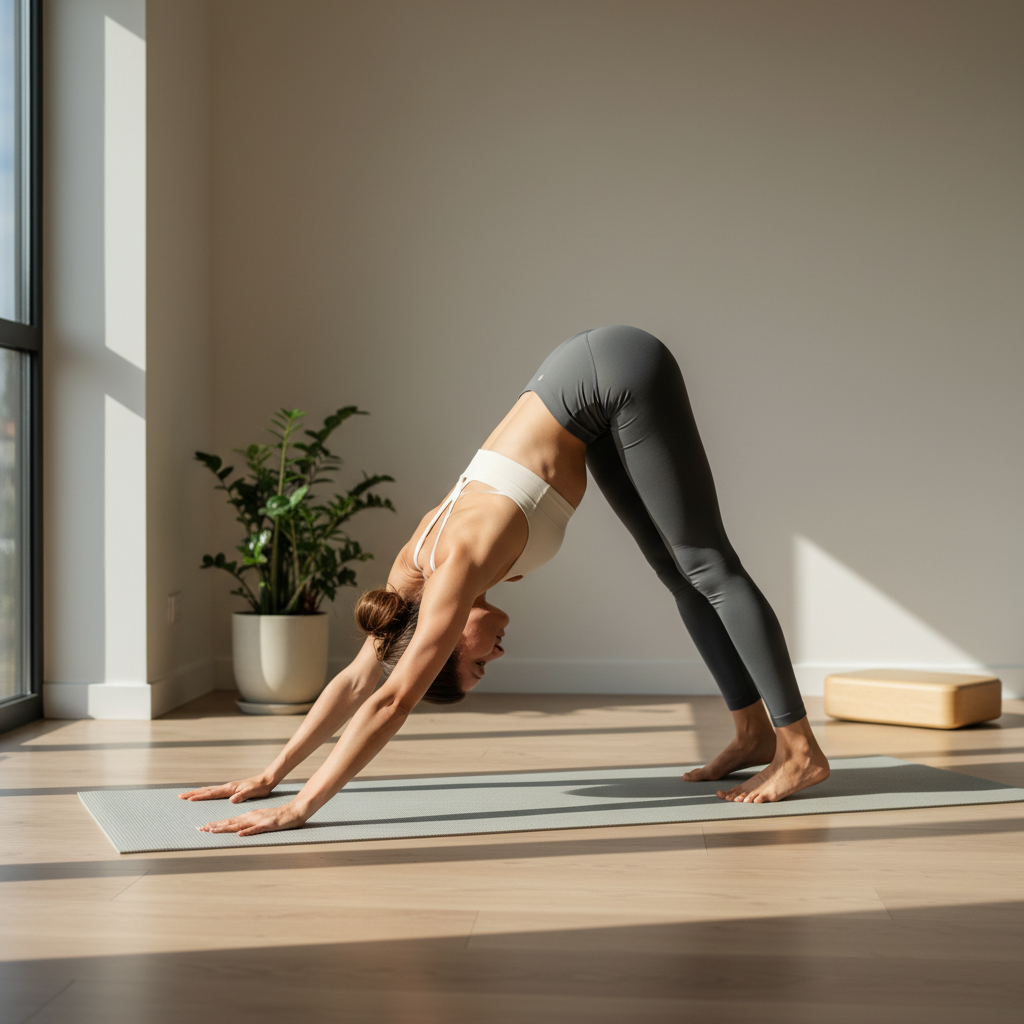
If hamstrings feel tight, keep the fold “small.” Chasing a deep stretch early often backfires.
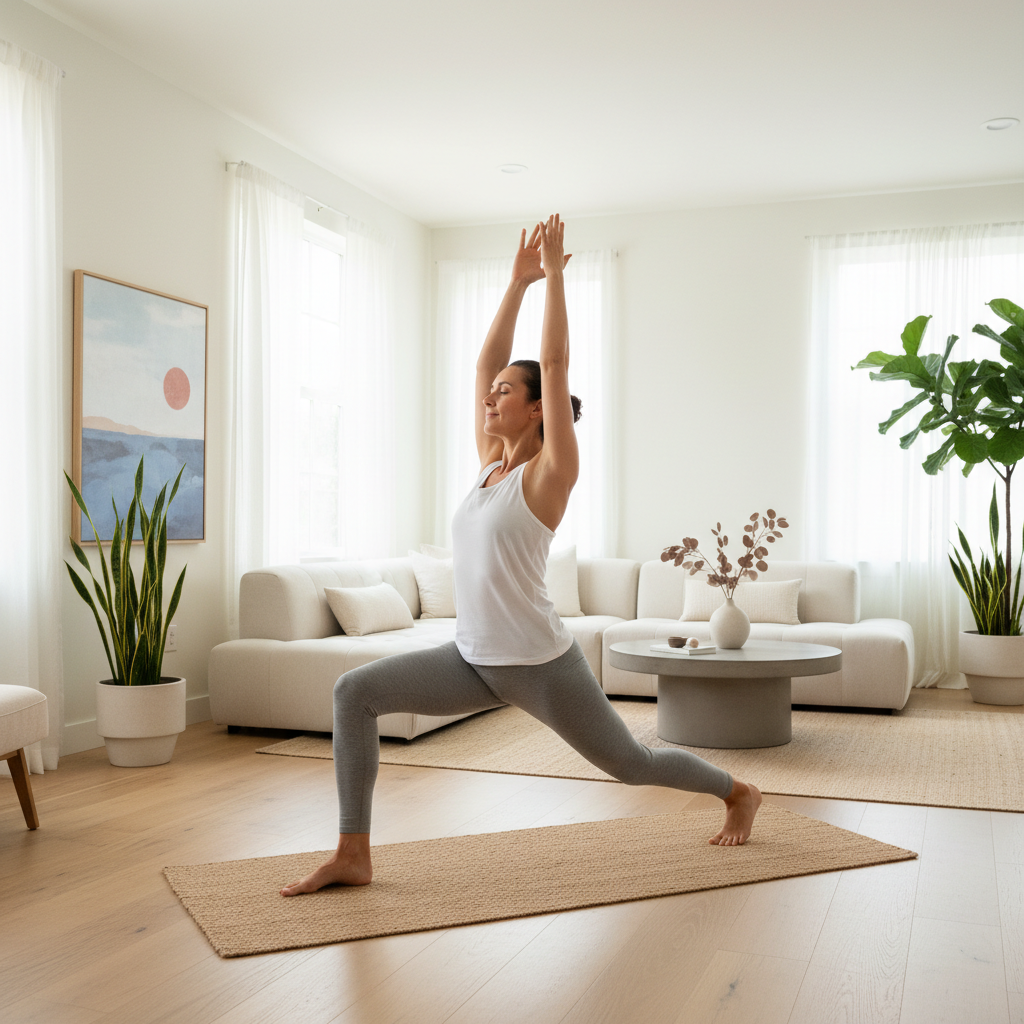
4) Low Lunge + gentle twist (30–45 seconds each side)
Step one foot forward, drop back knee if that feels better. Hands to thigh or floor. Add a light twist toward the front leg, no forcing.
5) Half split (20–30 seconds each side)
From low lunge, shift hips back and straighten front leg comfortably. Keep spine long. This helps a lot of people who sit at a desk all day.
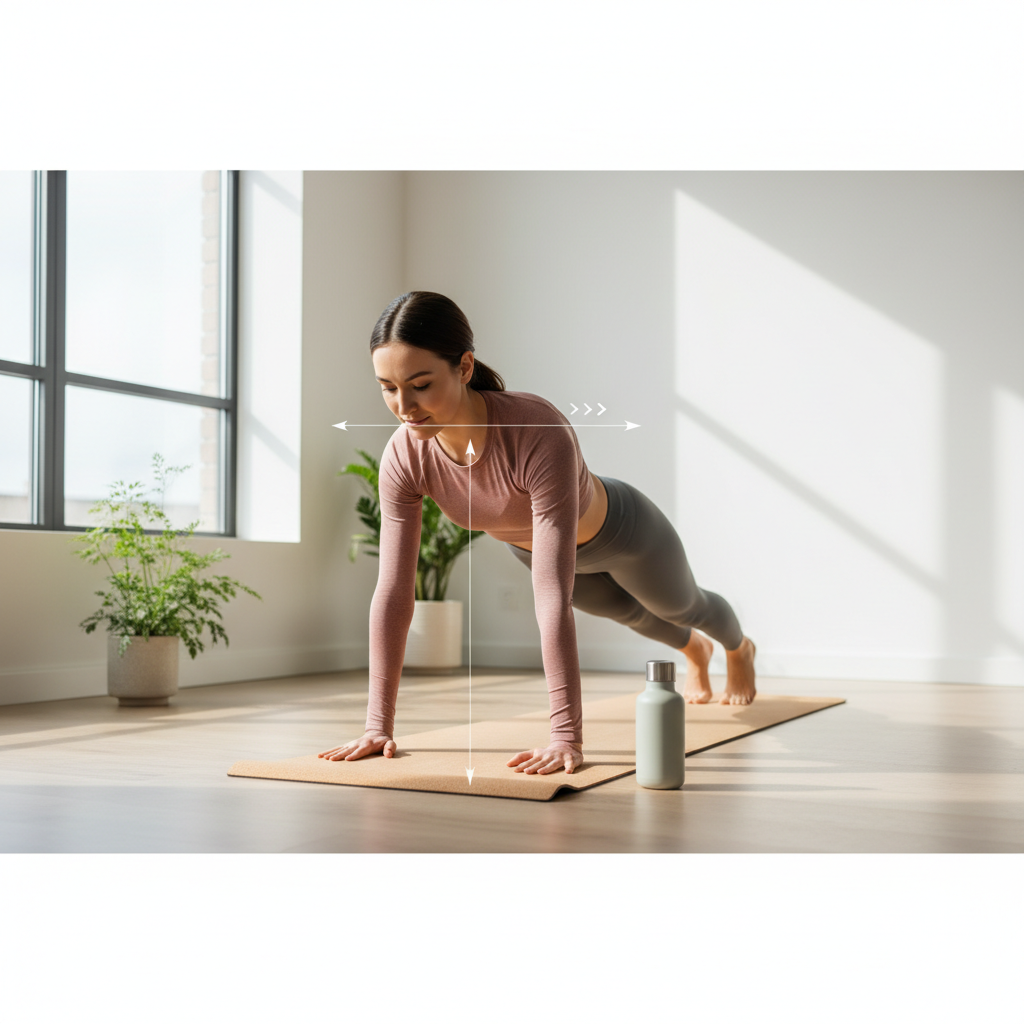
6) Plank to Knees-Chest-Chin or modified Chaturanga (3–5 slow reps)
This is the “wake up” moment. If you’re newer, lower knees first. You should feel effort, not neck strain or shoulder pinching.
7) Cobra or Sphinx (20–30 seconds)
Open the chest, keep shoulders away from ears. Low back should feel supported, not compressed.
8) Chair Pose to Mountain (3 slow cycles)
Stand up, sink into Chair briefly, then rise to Mountain. Let your breath set the tempo.
9) Optional finisher: 30 seconds of brisk marching or gentle sun breaths
If you want more “spark,” march in place with big arm swings. If you want calm focus, do two slow standing inhale-reach, exhale-lower cycles.
Make it stick: a realistic weekly plan (and a simple table)
Most people don’t need a longer session, they need fewer barriers. Set a minimum version you can do even on rough mornings, then add time when you feel good.
| Morning situation | Time | What to do | Goal |
|---|---|---|---|
| Overslept, low bandwidth | 3–4 min | Breath reset + Cat-Cow + Ragdoll | Loosen stiffness, reduce mental drag |
| Normal workday | 8–12 min | Full routine above | Steady energy without feeling rushed |
| Want a stronger boost | 12–15 min | Add 2 rounds of Sun A or extra plank reps | More heat, more alertness |
- Anchor it to something you already do: right after brushing teeth, before coffee, or while the shower warms up.
- Make the space boring and ready: mat down, no app searching, no outfit decisions.
- Stop one rep earlier than you think: finishing with “I could do more” helps you return tomorrow.
Common mistakes that quietly drain the benefits
This is where people lose trust in yoga. Not because yoga “doesn’t work,” but because the execution turns into a mini battle at 7:10 a.m.
- Going too deep too fast, especially forward folds when tissues feel cold.
- Holding your breath during effort, the routine should create space, not tension.
- Copying advanced flows from social clips, then feeling joint irritation.
- Skipping legs and core entirely, stretching alone may feel nice but not always energizing.
- All-or-nothing thinking, missing a day is normal, quitting for a month is optional.
If you notice sharp pain, numbness, or symptoms that worsen over time, treat that as a stop sign, not a challenge.
When it makes sense to get professional help
A well-designed morning yoga routine should feel supportive. If it keeps feeling “off,” it may be a mismatch between your mobility, strength, and the poses you’re choosing.
- If you have recurring low back pain, shoulder impingement symptoms, or wrist pain, a physical therapist might be the best first stop.
- If you’re new to movement and unsure about alignment, a qualified yoga teacher can help you modify quickly so you stay consistent.
- If you’re managing a medical condition or recovering postpartum, it’s smart to ask your clinician what to avoid.
Key takeaways to remember tomorrow morning
- Keep it repeatable: short beats perfect, especially before work.
- Match the flow to your body today: gentle on stiff mornings, stronger when you feel stable.
- Use breath as your pacing tool: it’s the easiest way to stay calm and energized.
- Leave room to improve: stop before strain, then come back.
Conclusion: a small routine that changes the whole day’s tone
This morning yoga routine works best when you treat it like brushing your teeth, not like training for an event. Do the 8–12 minute version for a week, and keep the 3–4 minute backup for chaotic mornings, that’s usually where consistency finally clicks.
If you want an easy next step, put your mat where you’ll trip over it, pick your “gentle” or “builder” track tonight, and keep tomorrow’s goal simple: show up and breathe.
FAQ
How long should a morning yoga routine be for energy?
For many people, 8–12 minutes hits the sweet spot: long enough to warm up and engage muscles, short enough to repeat daily. If you’re starting from zero, 3–4 minutes still counts.
Is it better to do yoga before coffee or after?
Before coffee often feels cleaner because you notice your baseline energy, but plenty of people do fine after a few sips. If caffeine makes you jittery, try yoga first and see if you need less.
What if I’m too stiff in the morning to do Down Dog?
Bend your knees a lot or do a hands-on-wall version. The goal is a long spine and steady breathing, not straight legs at sunrise.
Can this routine replace a workout?
It depends on your goals. This is great for mobility, light strength, and focus, but it may not replace cardio or heavier strength training if those matter to you.
Should I do morning yoga every day?
Most people can, if they keep intensity moderate and vary the effort. If you feel run-down, swap in the gentle version or take a rest day.
What’s the best pose for morning energy?
Chair Pose and a good low lunge tend to wake up the legs fast, which many people interpret as “energy.” Still, the best pose is the one you can do with clean breathing and no pain.
Is morning yoga safe if I have back pain?
It can be, but back pain has many causes. Start gentle, avoid deep forward folds or aggressive backbends, and consider professional guidance if symptoms persist or feel sharp.
If you’re trying to build a consistent habit but keep getting stuck on “what should I do today,” a simple weekly template and a short saved sequence can remove a lot of friction, and make your mornings feel less like a negotiation.